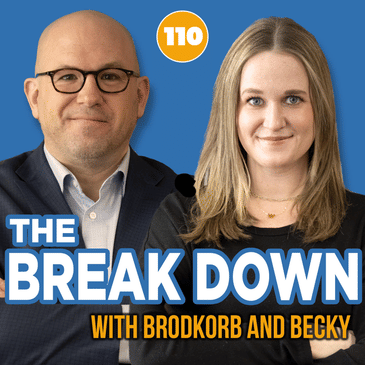
Welcome to another episode of The Break Down with Brodkorb and Becky, as Michael Brodkorb continues to fly solo while Becky Scherr is on maternity leave.
This week, Michael Brodkorb is joined by special guest Mike Norton, a prominent Minneapolis-based entrepreneur and political strategist.
In this episode, they discuss Mike's political journey, his take on Minneapolis's current state, and the future of Minnesota's second congressional district. Mike provides insights into his outspoken nature, his run for city council, and his views on various issues such as public education and healthcare. They also touch on the importance of civil discourse and the impact of social media in politics.
Whether you're a political junkie or someone interested in local affairs, this episode is packed with valuable discussions and perspectives.
- 00:00 Introduction and Guest Announcement
- 00:14 Meet Mike Norton: Entrepreneur and Politico
- 00:48 Mike Norton's Political Journey
- 01:33 Social Media and Authenticity
- 01:59 Becky's Maternity Leave Announcement
- 02:32 Mike Norton's Background and Achievements
- 06:03 The Art of Political Conversations
- 12:22 Optimism About Minneapolis
- 18:26 Biking in Minneapolis
- 27:35 Childhood Memories and Bicycle Tricks
- 27:54 Motorcycles: A Love-Hate Relationship
- 29:06 E-Bikes and Commuting
- 30:17 Political Journey and Minneapolis Politics
- 33:02 Challenges in the Political Process
- 40:09 Considering a Run for Congress
- 46:46 Policy Priorities and Vision
- 54:39 Final Thoughts and Farewell
The Break Down with Brodkorb and Becky will return with a new episode next week!
Get full access to On The Record with Michael Brodkorb at michaelbrodkorb.substack.com/subscribe
[00:00:12] Welcome to The Break Down with Brodkorb and Becky, a weekly podcast that breaks down politics, policy, and current affairs. I'm Michael Brodkorb. Becky Scherr is off on maternity leave and you're stuck with me solo this week, but I have a fantastic guest joining me today. I'm joined by Mike Norton, a Minneapolis-based entrepreneur, political strategist, and rising voice in Minnesota's progressive circles. A former vice chair of the Minneapolis DFL and 2021 city council candidate, Mike has built a reputation for the past year.
[00:00:40] as an outspoken critic and bridge builder in local politics. He is also the founder of Railbach Consulting, a logistic firm that earned him a spot on the Minneapolis-St. Paul Business Journal's 40 Under 40 list. Known for his efforts to reframe the narrative around Minneapolis through social media and civic engagement, Mike Jones has to talk about his political journey, lessons from inside the DFL, and whether a run for Congress in Minnesota's second congressional district could be on the horizon.
[00:01:09] Thank you for joining me today. And I hope you enjoy the show.
[00:01:16] I am very excited for today's interview. Now I'm always excited for interviews, but I'm especially excited for this interview because this is someone who I've seen on social media. He's active. He may represent me in Congress soon, potentially, but he is just someone who I have just, and it's interesting, Mike, because I want to introduce Mike Norton from Minneapolis, but is considering,
[00:01:40] this is a quasi-political podcast, and we'll get into the possibility of you representing me in the second congressional district. But you are someone who is very active on social media. And I just want to say at the onset to our listeners, make sure to follow Mike on X slash Twitter, whatever it's called, and other platforms. But he is just someone who has an incredibly fascinating background that we're going to dive into.
[00:02:34] To not break the podcast. So Becky can come back to it, Mike. So Mike Norton, we have one assignment tonight to not break the podcast. I think I'm a poor person to have on if that's your goal. I think that's a high risk. Exactly. Now, you have an amazing background, and I thought it would be best if you could just explain to our listeners a little bit who you are and why we're talking tonight. I don't really fully understand why we're talking. No, I'm just kidding. Oh, great.
[00:03:00] Yeah. So I'm Mike Norton. I'm a small business owner. I've got a company based in Minneapolis that's twice been named to the 50 fastest growing companies in Minnesota by the Business Journal. We won a Techni Award for our software and logistics space. We beat out Digital River and SPS Commerce, two nine-figure revenue companies. We're a very small firm.
[00:03:17] Carved up my space there. And because I don't have a boss, I've been able to be maybe a little more outspoken and be more real about how I perceive things. People don't always agree, but I've been fortunate to have a lot of people be willing to have a conversation with me.
[00:03:32] And it's turned into, I snowballed into a few things where I ended up running for city council in Minneapolis. I was the Minneapolis DFL vice chair for a minute. I resigned in disgrace. And then I've just been tangentially involved in politics since that point. But I just try and stay in the mix. And I appreciate having conversations with people that know what they're talking about and are real and honest. And so I thank you for having me on, Michael. Yeah.
[00:03:56] I also want to note to our listeners, you were a Minneapolis St. Paul Business Journal, 40 under 40. So congratulations on that in 2023. I'm actually also a disgraced former 40 under 40. I'm 41 now. So that they make you give the award back at that point. Oh, you have to give it back. Okay. You've worn a lot of hats, entrepreneur, activist, potential political candidate, but you were also in the past. How would you best describe yourself?
[00:04:24] I'd prefer you don't put me in a box. I don't know. I think people want to assign me a certain role or a certain space and they maybe know me in one area or another. I guess in the shipping container industry, people have no idea I'm a shit poster. It's just really maybe how you got to know me. Would you call yourself a shit poster? I probably a legendary shit poster. I would say. Yeah.
[00:04:44] By the way, I want our listeners to note that Mike was the first guest to ever ask if he could swear on the podcast and I gave him a good thumbs up. This is a no hold bar episodes. Put the meermuffs on the kids because with Becky gone and with a foul mouth Mike here, it's going to be a wild episode. Did you see Richard Painter described me as a potty mouth the other day? Yes, I did. A potty mouth. Right. What's your, let me get your take on that. Social media. What's your take on swearing on social media?
[00:05:13] Yeah. On swearing on social media? Yeah. I think it's fine. I don't know. Gotta be you. People swear in real life. I don't know what to say. Yeah, people swear. I try and be honest. I try and say it like I would say it if you were out. And I think that's why people engage sometimes. A couple of things. My mom, my dad passed away a few years ago. My mom's still alive. She reads my posts, so I try to keep it clean. But I am a notorious swearer and user of profanity off the air and off social media.
[00:05:42] I use it religiously. I use it quite aggressively. I really, truly believe in being my authentic self. And my authentic self does not have much of a filter when it comes to swearing. And so I just gotta be me. I think you should extend that to social media. Let your mom know, like, this is who you are. Have you heard the song Pink Pony Club? She's saying, oh, mom, what have you done on the stage in your heels? It's really, you should look into it. The Pink Pony Club, it's really a song, a chaperone about conflict with your mother.
[00:06:11] And trying to be your true self and finding that place where you belong. Yeah, absolutely. One thing I want to note at the onset is one of the things that drew me to having you on this podcast was your ability to have discussions with people. You seem to be someone, and that's the ethos of this podcast, which is we want to have a space where people can just talk to each other, disagree, not be disagreeable.
[00:06:34] And I will say that every person that we invite on this podcast is someone that we've, we want to have on potentially more than once. And so my hope is that this goes well and you want to come back on, but we really try to cultivate the type of guests of people that we think we could have sit down and have a beer with and have a conversation with. And that's something that I've noted about you. And we'll talk a little bit about some of your social media posts.
[00:07:00] But one thing I want to note is you had, and this caused a little bit of disruption on social media. You sat down with a Republican representative, Walter Hudson, for a little, I believe, a little tour through the city of Minneapolis, correct? We sat on our bike seats and rode around. And that kind of started as shitposting. Like Walter and I were going back and forth. I think I ended up in the Star Tribune for my tweets about biking. And Walter wanted to disagree with my perception of Minneapolis. And I told him, why don't we come have a bike ride?
[00:07:28] He picked the neighborhood and we went out. I took some heat for it, which I get. And I think there's people that are frustrated with some of Walter's views, particularly on trans rights. But like you said, I think that's important to have a conversation and be open to it and be able to disagree without being disagreeable. That's like a Barry Goldwater quote. And I used to be a Goldwater Republican back in the day when Republicans were still sane. But I think you have to be open to particularly people that are in the state legislature.
[00:07:57] You can't just claim that they're problematic and ignore them completely. Like Walter's voting on legislation every day. And so if you want to change his views, you should talk to him. And that's what I was trying to do. Were you surprised by the pushback that you got? I don't know. I step in it sometimes and I'm willing to talk to anybody. I think a lot of the pushback was valid, to be honest, because I made it look maybe friendlier than it was. But Walter was very cordial and we had a nice conversation.
[00:08:27] I don't regret the conversation. I maybe regret the way I posted about it after and making it just as friendly as it was. But I appreciate him being willing to have that conversation because not everybody would. Did he bring his own bicycle or did you have to supply one? I'm sorry? Did you have to, did he bring his own bicycle or did you have to supply one? We both brought our own bikes. He had his own bike. Okay. He has a bike. Okay. I don't know that people, I don't know that people knew that about Representative Hudson. His bike could use some work.
[00:08:53] He actually talked about maybe using that e-bike credit this next year because the bike he had was marginal. But he, to his credit, he got out there. We, I showed him some of the places where there's no bike path. You're biking in the street and just that realization that you're inches away from a truck at any moment. I think for him, it maybe changed some of his perspective on, on things like bike lanes. He let know to me that his son is a big transit advocate and big on trains, big on public transit. I don't know.
[00:09:21] I think Walter maybe isn't like the cartoon villain everybody wants to make him out to be. He has his own kind of social media personality that people see. But my conversation with him was very cordial and he seemed very informed and approachable. And I don't know. I hope that, I hope that he's that way, maybe in his public facing persona more, but I appreciated the conversation. Talk a little bit about, before we pivot on that, I think it's interesting. One of the things that I find interesting and I respect immensely is that desire to talk with people.
[00:09:49] And it's not surprising to me that you got some heat. I get heat for speaking to people and people get heat sometimes for speaking with me. That's an issue that I deal with on a pretty regular basis. Is there something, did you grow up in a household, a political household of some sort where discussion in that was natural to you? Because one of the things that I'm concerned about as a parent is civility and tone.
[00:10:14] And my wife and I try to do a good job of raising our kids' civic IQ, particularly understanding issues and feeling comfortable talking to people from different sides. Did you have an upbringing like that or where did you come to that? Yeah, no, I grew up in a really big family. My parents have both been divorced multiple times. So I've got half siblings. I've got eight brothers and sisters that are full siblings or half siblings. And then I've got step siblings beyond that. So they're just different personality types.
[00:10:43] Like I have family members that voted for Trump. I have family members that have views left of me. And I think you have to be able to either get along and have those conversations without taking it personally or not have the conversation at all and end up missing out on interactions with your family. And I think if you're unwilling or uncomfortable with someone who disagrees with you, it doesn't go well, I think, in the long term. Because everybody has different perceptions or opinions or perspectives.
[00:11:07] And if you are unwilling to interact with anybody that is outside of your own kind of worldview, even if you're right, it doesn't matter because they're not going to hear it. And I think you have to be able to just at least have those conversations and be open to other people. I think that's spot on. One of the things that I absolutely love about having a podcast is the ability to talk to people. And, Mike, we're meeting for the first time face-to-face.
[00:11:31] But the fact that you're on social media and I'm on social media, we've connected, and we have this opportunity on the podcast to talk, I just think is remarkable. And social media gets a real bad rap in many ways. But this is an example, I think, of where it's positive. One of a good friend of mine, Jeff Kolb, met. He trashed me up and down on social media. And we met after he disagreed with me on some stuff. And so social media has a lot of vices and there's a lot of criticisms of it.
[00:12:00] But you can find, I think, real good people on it sometimes. And I think you're an example of that. And I think this conversation will be an example of what can come from social media. Yeah, no, I do think, especially if you're open to it, Jeff and I have gone back and forth. But I think a lot of times you see maybe a handful of tweets from somebody or a handful of posts or sound bites or whatever they might be. And you base your whole perception on those two or three things that you've seen or heard. And there's more to people than that.
[00:12:28] And when you have a face-to-face conversation, it's different. Jeff's a friend of mine, but he's an acquired taste. And so he'd say the same about me. Let's talk a little bit about social media because one of the things you're known for is your optimistic narrative about Minneapolis. And I'm in Minneapolis right now. Bidet McCoskey right behind me. I'm hoping to get a sunset view for you as the evening goes on. But Minneapolis is a lovely place. I feel fortunate to live here.
[00:12:54] And I will say one of the things, and I'm a glass half full guy. I have to be. I've made some mistakes in life, challenges, and I'm generally, I gravitate more towards optimism. And so one of the things that, you know, you are known for is pictures, great pictures, by the way, of Minneapolis on a regular basis.
[00:13:14] And talk a little bit about that motivation to shine a light on positive attributes of Minneapolis that you thought were getting a little bit overshadowed. Yeah, I think that's a good example of you. You have maybe one or two bullet points that you see, like an increase in crime, some of the changes that have happened. And that's what you base your whole perception of Minneapolis on, especially if you're from the suburbs or beyond. And you're only coming in for sporting events.
[00:13:41] Or you used to come in to commute for work and now you don't anymore. And you just see what Crime Watch posts on social media. And that can give you the belief that Minneapolis is this scary, burning hellhole. But contrary to that, you go around most, the everyday life in Minneapolis is not that. Everyday in Minneapolis is nice. It's a beautiful place to live. It's this city that was built on 19th century tourism.
[00:14:07] And all the lakes that were dredged for tourists in the 1800s or early part of the 20th century before air conditioning, before airlines, all still exist. So you can go walk around this park system that's unparalleled in the country and experience a city that's really almost European right here in the U.S. There's not really any cities in terms of walkability, nature, arts, culture, restaurants in the U.S. that are like Minneapolis. So I just try and show that's also the case.
[00:14:34] I would say that I would consider myself, my wife used to work in downtown Minneapolis. She doesn't anymore. But I go down there not just for sporting events, but I'm down there on a very regular basis. And I do think that Minneapolis does not get a fair shake, particularly from conservatives. And I think that it's important to talk about the positive things that are going on in Minneapolis.
[00:14:58] And I don't think I've never found your coverage of Minneapolis to be not realistic, but just you focus on the positives. And I will say I identify with that. And in my experience interacting with Minneapolis, I go down for sporting events and other things. My children were down there for school events recently. And you feel you want to be safe everywhere, but it is a big city. And I just want to note, I was pasted by a car outside my house in Egan.
[00:15:27] And I think I live on the safest neighborhood in the street, in the state. And so I just like the fact that you're an advocate for your city. And I think that's honestly what we need more of is we need people, I think, out there talking about the positive things in life, but particularly someone as invested as you are in the city of Minneapolis. No, I appreciate that. And I agree. You want people to feel comfortable. You want people to feel safe. I don't want to discount that there has been an increase in crime.
[00:15:55] I think everybody knows someone in Minneapolis that's been mugged or something like that in the last five years because it is a problem. But it's not the everyday experience. It's not something that happens to every single person every single day. It's still a beautiful place to live. I wouldn't trade it really for anywhere. I don't want to. I grew up in other places. I've traveled a lot for work. I've been fortunate to be in a lot of different cities, but there's really no place like Minneapolis. Your heart's there, isn't it? I love Minneapolis. Yeah.
[00:16:22] What is it for our listeners and we have listeners all across the state? What is something about Minneapolis that you wish more people knew? I think the park system, the lakes that are in the city, like the chain of lakes that are right behind me right now. Those were dredged in the late 1900s, early 1800s, excuse me, early 1900s. So they were deeper for tourists to come and you have this deep blue color. You don't have the algae on the lakes. There's pathways around them that were all built for tourists.
[00:16:48] And the tourists stopped coming at a certain point when air conditioning and airlines happened. But it's all still there. Like it all still exists. And I think that if you're afraid to be in Minneapolis, you miss some of this beautiful nature in the city. We have a beautiful skyline. My favorite kind of hidden gem in Minneapolis is Lakewood Cemetery. So Lakewood Cemetery was founded in, I think, 1870s. It's right in between the Damocosca and Lake Harriet.
[00:17:13] It was at the time, the intention was to get it out of the city because that was like the far edges of Minneapolis at that point. But it's this beautiful old Gothic style. Everybody has these big obulist monuments or giant tombstones. The Mars family has a mausoleum or private mausoleum. It's this like park-like setting because it's so isolated from the city, but it's in the middle of the city.
[00:17:35] And it was from this era when the lumber barons and the flour milling barons and all these other people came to Minneapolis from the East Coast and from Europe to build their own name. So they all wanted to show that they were a cooler guy than the next guy and built a bigger tombstone than the next.
[00:17:54] But you can walk around Lakewood Cemetery almost by yourself in a lot of cases and really experience this tranquility in a city that you wouldn't experience in almost any other city, a major city in the U.S. Absolutely. My wife and I, before we moved to Egan, we lived 50th and Chowen. And so I lived there for a number of years. And I'm familiar with kind of that lakes area of Minneapolis and spend a lot of time running and being there. And there's just some gorgeous homes along the lake.
[00:18:23] And what you've identified Lakewood Cemetery, aside from being a cemetery, it's an impressive area of Minneapolis. Yeah, it's basically a park, but people get anxious about it being a cemetery so they don't want to go in. But no, Minneapolis just in general is a beautiful city, and I feel fortunate to live here. All right, let's talk about bikes because I got a lot of questions about bikes. All right. So you bike almost every day, correct? Correct. I biked today. My hair is a little windblown, actually, right now. I don't know what that's like. Man, I'm bald. I wish I had your problems.
[00:18:52] You could let the wind blow through your eyebrows while you bike across. I'd be happy to take you on a bike. If I took Walter Hudson, I could go with you. Let's do that someday. By the way, I want to just note that one of the things I've been toying with is trying to figure out how to take the podcast a little bit on the road. And I invested a fair amount of time to see if I could pull off a video podcast while we were out biking. And I just didn't want to risk it with particularly me riding a bike since I have one. I also, I'm a helmet wearer on bicycles.
[00:19:22] And so I don't think anybody looks cool unless you're like in the Tour de France. You don't look great on a bicycle helmet. So I didn't want that to be the look. But I did. And I would welcome the opportunity to ride a bike. But you are a big bike rider. Yeah. And I never wear a helmet. I think helmets. What? Honestly, I think helmets are, give this perception of safety that don't, if I get hit by a car, whether I have a helmet or not, I'm going to fucking die. You know what I mean? Let me just say something to you.
[00:19:47] As someone who was in a car crash, suffered a traumatic brain injury, and then was hit by a car, I will just say to you, wear a helmet. You got one brain. And so I am going to preach a little bit of bike safety. And I'm going to encourage our listeners to wear a bike helmet. But you, of course, are a rebel. And you will not wear a bike helmet, apparently. I don't think that's that rebellious. You go to the Netherlands and the Dutch, none of them wear helmets because they all have separated bike lanes.
[00:20:13] If you have bike safety, like, you're not going to get in an accident so bad separated from vehicles. Like, it's cars that are dangerous. It's not bikes. It's cars. And it's when you're biking next to cars that it's dangerous. So if you're biking around the lakes, like, there's no real reason to wear a helmet. There's maybe a few blocks in between. And honestly, what I really try and do is stay off of any road where I might interact with a car where I can't fully separate myself from that car. I'll bike through neighborhoods. I'll bike on protected bike paths.
[00:20:39] I'll try and stay out of anywhere where I've got to, like, ride in some painted bike lane next to cars. Because that's when it doesn't matter if you get a helmet on if you get run over. Okay. Prepare yourself to maybe be offended by this next question, okay? But I just want to just preface it by saying this. I live in Egan. I ride a bike occasionally. I don't – I would never bike in Minneapolis or in any large city because I would just worry I would get pasted. Tell me why bikes shouldn't just be on sidewalks.
[00:21:10] Because people are on sidewalks. People are walking on sidewalks. If you widen sidewalks to the point where they're so big, that's kind of what we have on Hennepin now, where we have that kind of – and you have downtown as well. You have that separated bike lane. That gets problematic, though, because somebody gets onto the sidewalk, they're texting their friend, or they're trying to figure out where some restaurant is, and they're in a bike lane because they don't discern where the sidewalk ends and where the bike lane starts. I think bikes are kind of their own separate thing. And in most other countries, bikes have their own separate space. A lot of people bike. It's not like it's just a few dozen.
[00:21:39] It's thousands and thousands of people that bike every day in Minnesota. I think it's safer for everybody, cars included. Nobody likes bikes next to them when they're driving. That's – No, I don't. I think everybody would be fine if bikes have their own place, cars have their own place. And that's all that bikers are asking for. How would you, if you were the governor of the state – that may happen someday after your run for Congress – how would you design roads to accommodate pedestrian traffic, bikes, and cars?
[00:22:06] What do I not see that you think the way the road should be designed to accommodate bikes more? I think that the issue we have in the U.S. – so I'm in the logistics industry. I sell and rent shipping containers for a living. It's a very international type of business. There's really not a lot of shipping container companies in the U.S. You have to go to Europe and Asia and other places to interact with your vendors and other people that are in the industry. But in other cities, cars aren't the priority that they are in the U.S.
[00:22:33] And I think that with as expansive as cities are in the U.S. and as suburban as cities are in the U.S., you end up in this situation where cars are a necessity to the point where transit is almost inefficient because you don't have the economies of scale or the density that you need to really make transit effective. But in other places, you have this mix of people on sidewalks, people on bike paths, people on trams or buses or subways.
[00:23:00] And cars are this third priority because they're the least efficient way to move people. But what's unfortunate in the U.S., they're one of the only ways to move people. You can't just fix it overnight. You can't solve it. But I do think that I don't think you need to invent any specific roadway. You can just follow the template that you already see, even in places like North America, like Toronto or Montreal, where you have separated bike paths and that's given a priority just for safety reasons.
[00:23:28] Why do you think there wasn't more of an emphasis on bikes and accommodating bikes when we design roads, particularly in the United States? I think there's almost no emphasis on bikes, unfortunately. People have this maybe frustration over bikers that they don't want to spend any money on bikes. 99% of roads are not for bikes. It's not like there's this plethora of bike paths in the U.S. So I would like to see more of a priority on bike paths.
[00:23:55] It doesn't need to be even 10% of our mileage for roadways, but it should be 5%. And we should have some protected bike paths throughout, not just metro areas, but beyond. I've never disclosed this before and I don't understand why I'm feeling the need to disclose it, but I got a ticket on my bike once. I got a ticket on your bike. What? You have to earn it on your bike. Yeah, I went through a stop sign. I went through a stop sign as a kid. It's not a thing anymore. And thankfully, and my kind of Apple record is known to everyone.
[00:24:24] It's probably the first time I've ever publicly disclosed that I got a ticket riding a bike. When I was a kid, there was a police officer in Cottage Grove who was just parked there and he was just stopping kids left and right. It was the first week of out of school summer. And it was this, apparently the Cottage Grove Police Department needed a quota that week. And they decided, now, I don't know if it went on my record. I think I had to go to a bike training something so it didn't go on my record. But I was mortified that I could get a ticket on a bicycle.
[00:24:53] Can we go back to this quota comment you just made? It sounds like anti-police rhetoric. Oh, I'm sorry. Are you trying to defund the Cottage Grove Police? Is that where you're saying? My goodness gracious. I stepped in it. I just was frustrated. I was offended. And I think my parents did their best to plead the case and throw their names around, but it didn't get anywhere. And I did. I remember having to go to some bike training where I had to go through this obstacle course. And I don't get it. I never understood it. And I'm glad it's since been outlawed, as you pointed out, correct? Correct. Or legalized, maybe.
[00:25:23] Yeah. The rolling stop, the Idaho stop or whatever it's called. Yeah. I wasn't rolling. I blew right through it. You should be able to. You have to stop and start. The inertia that's needed to get a bike going again versus a car. I think you just give that quick back and forth and roll. I like the, I'm just going to say this because I'm meeting you for the first time. Be safe out on the roads with your bicycle and maybe consider just a soft helmet. Maybe you can get something that looks cool because I'm worried about you getting pasted
[00:25:51] because particularly if you're going to represent me in Congress, which we'll talk about soon, I want to make sure you're there for as long as you can be. Okay. I appreciate that. No, I'll strongly consider it. But I think as a protest, people just need to see my flowing locks as I ride by them. Do you have a basket on the front or do people still pull the deck of cards in the wheels to make it sound like a motor or anything like that? Are the kids still doing that? I don't have a basket. I used to have a basket in back, but the bike, my daily, I have two bikes.
[00:26:21] I have like a cruiser bike, like a beach cruiser. And then I have my daily bike. I used to have a, not a basket, but like a rack on the back of it where you could put things and just fasten it down quick. But I ended up having to swap it out for a different one. The newer model, because I had issues with it. It's a Dutch bike actually. Wow. You dropped the Netherlands and mentioned the Dutch more than any guest before. So give it a cap to you. I love the Netherlands.
[00:26:47] So I have to go to, there's a conference in Europe every year for the logistics entry called Intermodal Europe. It's usually in Rotterdam. It'll go to other cities like Hamburg or Amsterdam. I think next year it's in like Barcelona, but Rotterdam like every other year. And so you end up flying out of Ski Pool, Amsterdam airport. And I saw this bike and it's just on this display and it's a beautiful bike. It's actually, I'm looking at it right now, but it's a Van Moef. It's this kind of like sleek design.
[00:27:15] It's not like a true e-bike, but it has like a pedal assist. So it doesn't have the big bulky battery because it doesn't have the same level of power, but it's meant to just like flatten hills and make your day smoother. But it was maybe an early adopter on it when I saw it in the airport. I ordered it and it broke three times. They kept sending out. I was probably their only Minnesota customer. Eventually they went bankrupt, I assume, for replacing my bikes. And so now I've got like a, basically the DeLorean of bikes that can't fix, you can't buy,
[00:27:43] but it still exists and you can ride around on it. It's great. But what about the deck of cards? You put that in the back wheel and make it sound like an engine. I remember doing that when I was a kid. Putting one on it? The deck of cards. Don't you remember putting the deck of cards in the back and it makes it sound like an engine? I sound like a thing. I could think about me. I'll look into it. I'll get back. It's a great sound. You can look cool. It just sounds just rough. Sounds like you're riding a motorcycle, which by the way, I have to ask, are you, what about motorcycles? What's your take on motorcycles?
[00:28:13] You should wear a helmet with a motorcycle. That's a different thing. You're on the road with cars. What I like about bike. Do you have a motor, are you a, are you pro motorcycle? I'm fine with people that like motorcycles, but it's not for me. That's yeah. I'm not that kind of badass. Yeah. It's motorcycles are scary and you're not really protected when you're out on the road with 9,000 pound trucks next to you. I don't know that I want to be going 70 miles an hour on a motorcycle. Just a quick story. I was, I always wanted to, I always had an affinity for motorcycles when I was a kid.
[00:28:42] And then I grew up in Forest Lake part of the time. And then, and then I had a Honda Spree, you know what a Honda Spree looked like? It was this like scooter. I was, and I got in an accident, wiped out on it. Someone cut me off in a construction zone. I had a helmet on, thankfully. And I decided at that point I was done with motorcycles after riding the Honda Spree that I wiped out on. But yeah, I'm not as much of a motorcycle person now, but I do have a bicycle that I ride occasionally. It does not have a basket.
[00:29:08] It does have a horn and it does have lights on it and maybe some flare and other stuff's on it. I like it. It's a good, it's a nice bike. I think horns, horns and lights are important. I agree with all of that. Yeah. Yeah. E-bikes. What's your take on them? I have a quasi E-bike. It's not like the level of E-bike that maybe you see. I don't really care when they're basically watered down motorcycles. Got it. You're going 30, 40 miles an hour on a bike path. I think that's problematic.
[00:29:35] But it is a way, especially if you're commuting, if you've got maybe a, what would be a 20 minute, 15, 20 minute car ride that you can now, or a 40 minute bike ride, but you can now cut down to a 20, 30 minute bike ride. It's nice to not show up sweaty to places. I commute by E-bike all the time. I'm, it's not, it's a pedal assist. So it's not maybe quite the same level of E-bike that everybody associates with E-bike, but I like it. I think that they're great. I think that the rebate, unfortunately went to maybe the wrong crowd that it should have gone to.
[00:30:05] It was just more like a bonus for people that could afford an E-bike and already have cars. It should really go to people that don't have vehicles first would be my belief, but I like E-bikes in general. I had a sweet BMX Mongoose when I was a kid and Mongoose just came out with a 50th anniversary of a couple of models that I've been looking at. So I might be cruising around Egan in my updated Mongoose BMX bike, but that's probably the most that I'm going to have in store for me. Let's pivot to politics for a second for a little bit.
[00:30:34] And let's talk about your involvement in Minneapolis politics. Describe a little bit of your history and where you agreed with the party, disagreed with the party and some of your political views on politics, particularly on the DFL side. Sure. So I ended up running kind of the way I got involved was I ran for city council in 2021 the year after George Floyd was murdered by Minneapolis police. I was frustrated that my council member seemed to be an impediment at times to change in terms of police accountability.
[00:31:03] I think that she's probably representative of her ward. Southwest Minneapolis and the viewpoints there, it's basically Northeast Edina. It's almost a suburban ward. But I was frustrated that no one was willing to run against her because it was a done deal. Just more as a protest than anything, I ended up running for city council just focused on police accountability. I think I got tied in with a lot of the leftists, even though I'm more of a moderate than maybe people expect me to be.
[00:31:30] But in terms of DFL politics, not moderate overall, but ended up getting tied to the leftists because they were more interested in change and more interested in actually getting something done. Where my perception of maybe the conservative Democrats in Minneapolis was that they were fine with the status quo and they were okay giving lip service to change, but not actual change. And so I wanted to run. Ended up running, got my ass handed to me, which was to be expected. The council member that I ran against was very entrenched.
[00:31:58] She's probably going to be there as long as she wants to be there, which is fine. But got tapped to be Minneapolis DFL vice chair after that. Just some people involved in the party wanted me to run. I was reluctant about it, but ended up doing it. I was vice chair for not a full term. I became frustrated really with the caucus and convention process more than anything. It was just not managed well. And from a state level more than anything, it was a situation where the Minneapolis DFL is all volunteers. I should just clarify.
[00:32:27] All volunteer run. So you have this team of volunteers trying to put together caucuses and conventions for 13 awards. And you have bad actors that are in the mix at that point. And people that want to figure out ways to maximize their chance of being endorsed by DFL and are not unwilling to be nefarious about it. And the state party, when we came to them, was indifferent, more or less. They said, you have your basically structure.
[00:32:56] Here's how you can go forward. And we don't really care. Here's the policy. Good luck. And so I resigned in frustration with that and the overall structure there. I called out some of the party leadership. When I resigned, I guess I would say I'm not afraid to go against the party when I feel like the party's not in the right. And I think the problem, especially in Minnesota, is a one-party state. Fucking Royce White running for Senate. GOP is no longer a serious party. In Minnesota, they are not. If we can be real.
[00:33:25] And so because of that, the conventions, the caucuses, the DFL primary are what matters. That's the way you get endorsed. That's the way you get elected. And so I think calling out some of the party, the problems within the party are important. And I think people should be maybe more willing to bring that up, not afraid. But the problem is if you speak out against Ken Martin, Ken's the DNC chair at this point. So you limit your options. Are you a—first of all, I identify a lot with what you said. And what I identify with is speaking out.
[00:33:55] I'm a Republican who's had challenges and feels isolated, frustrated with the trajectory and a political party that embraces candidates like Royce White, who I think in no way, shape, or form have any temperament or redeemable qualities at all that could ever represent the state of Minnesota in the United States Senate. And so I understand that. And one of the things, just in prepping for this interview, something about you that I did
[00:34:22] truly also identify with is your willingness to speak out, your willingness to speak out about your party. I think that is—we need more of that. And as much as you would classify yourself as a Democrat and to what degree I consider myself to be a homeless Republican, I think one thing that does, I think, bind us, that there's a similarity between us is our outspokenness. While no one has ever asked if they can swear on our podcast, I did really the fact that
[00:34:48] you asked it because I am someone who sincerely believes that we should be our authentic selves. And you having the comfort to ask that, hey, can I swear on your podcast? I'm like, yeah, this is going to be a fun interview. I'm going to be looking forward to talking to this guy because he's not afraid to ask that. And I can see, particularly in the party process, how that could rub people the wrong way, particularly when you want it to be different.
[00:35:13] And I think your description of particularly the Republican Party in Minnesota and how this is a truly a one-party state right now in many ways, but particularly in Minneapolis. I worked on a mayoral race in Minneapolis in 97. I worked on Barbara Carlson's race when she ran for Minneapolis. She was a former Minneapolis City Council member. And it was tough back there for Republicans. And she was endorsed by the Independent, wasn't fully endorsed by the Republicans, but she got some party support.
[00:35:41] The DFL is a one, I mean, Minneapolis is largely a one-party town and Minnesota is also statewide a one-party state. And so having people, while I think it's important to have Republicans who want to be thoughtful, I think it's also as equally important if you believe in a vibrant two-party system to have Democrats who want to be, who raise questions about the party process. No, I agree. And I think one, you have to be willing to make those criticisms.
[00:36:08] Like we should be allowed and able and comfortable to criticize kind of our own group, one. But two, it highlights where people actually stand if you're running against someone of another party. If it's just a bunch of self-identified Democrats, even though I think there's a lot of Democrats in Minneapolis that if they were in a different part of the state, they'd be moderate Republicans. Or if they were in a different state even, they would be moderate Republicans. But you're non-viable if you run as a Republican in Minneapolis.
[00:36:34] So they tweak their views and they claim that they're Democrats and they roll forward. And I think that's the case even beyond Minneapolis. It's limiting. And I think then the conversation doesn't get had to the full extent because nobody wants to step on toes or run the risk of not being part of the viable party. If you could change something about the political process in general, not saying just Democrats or Republicans, but is there something that you would change about the political process
[00:37:01] to because it seemed that you had aside from it seemed that you had some process frustrations with how caucuses were being run and other types of stuff. Is there some process reforms that you'd like to see made in the political process in Minnesota, not just for Democrats or Republicans, but for both parties? I think that it's really about money. And we're talking about, we're talking about the reason I'm on is not because you want to talk about Minneapolis. You want to talk about CD2.
[00:37:29] CD2 is a year and a half away from that election. And we're already talking about it 18 months out because that's when you have to start running. If you want to be a serious, viable contender, you have to start being in the conversation at least a year out in a lot of these races because you have to win the primary. You have to have donors. You have to have a network. You have to have that base set up before you can even get going. And you can't just be a teacher with a good idea or a good platform. You can't just be a regular person.
[00:37:56] You have to have the autonomy and the flexibility to run a multi-month and really probably a year plus long campaign without the threat of losing your job or getting fired or losing your income or whatever else or taking a leave. Or you have to be somebody who's just independently wealthy to the point where you can not worry about those things. And so that's who you end up getting to run. It's people that don't need the money so they can make it their job to be a politician. It's pretty amazing what you just said.
[00:38:24] And there's and something you just said is you can't be a regular person. You're right. It's really a challenge to be a regular person because a regular person has a job, sometimes eight to five or other shifts, and they can't get they have a 40 hour a week job that they have to commit themselves to putting food on the table, being a part of a family or paying bills just in general. And you're spot on about money in politics and how it is.
[00:38:53] It's really the way that campaigns are financed and the way what it takes to build the campaign. You cannot be a quote regular person and do this as much as and as much as I think politicians like to be regular, claim that they're regular people. It's really tough to be a regular person and run for Congress. It just is or run for office in any way, but particularly for Congress, because the race has started and these elections have start so much so soon.
[00:39:22] No, you have to be able to basically not work for a year plus to run for any higher office at this point. It's not good for your everyday average person. And it's not good for constituents because you have people that are disconnected. You have people that the type of people that you can get to make donations of significance to a campaign, not like a $50 donation, like maxing out, are people that are very in tune and people that have a lot of extra cash.
[00:39:51] So now suddenly that's who you're really listening to. That's who's got your ear because you're on the phone with them every day for hours. Like you have call time every day to raise funds, to just keep your campaign going, keep the wheels rolling. And so if you upset that donor base, you remember when Mitt Romney went against Trump a few years ago and people were shocked by it because they're like, oh, he's going to upset his donor base. It wasn't because it was the right thing to do. It was because he could risk potentially continuing his campaign. And that's a problem.
[00:40:20] That's not good for society. Let's talk about CD2. I'm a resident of CD2, lived here over 20 years. And your name has been floated as a potential candidate for Congress in CD2. What's going through your head right now is you're deciding as there's a candidates on both sides of the aisle right now deciding should they pull the trigger and should they run for Congress in this open seat? Which will be because Angie Craig, who's represented for a number of terms, has decided to run for the United States Senate.
[00:40:49] So Minnesota will have an open U.S. congressional seat in the 2026 election. So what's going through your head right now as you decide whether to run or not? I think it's an interesting opportunity. I think it's a rare thing to happen where you have a seat come up that's vacant. Usually incumbents can stay as long as they want. Like Betty McCollum could stay as long as she wants to be in Congress. She could be like Nancy Pelosi and be there into her late 80s if she wants to be because
[00:41:16] that's how the system works is once you're in, you're entrenched and you've got everything set up and you can roll. So this is a very unique and rare thing to have something like this come up. It's not often that you have a vacancy. So I think that's even just the first consideration. But I do think that this is probably a safe Democratic seat. It's not the same seat that Angie Craig ran for. Was it six, eight years ago for the first time? The census shift, the demographic shift, tightening up towards the suburbs.
[00:41:44] And also just maybe you're a prime example of this where somebody who might normally be a conservative voter but has a tough time with the direction of the GOP under Trump, I don't see a GOP candidate winning the seat back. I think it's a safe blue seat. So really it's about the primary. I think it's going to be a wide open primary. And if it was just me against one other party, one other person, excuse me, maybe that's a different consideration.
[00:42:10] But I think it's going to be maybe up to a half dozen people in this primary. And it could be like the California gubernatorial race that Schwarzenegger got in on where it was just a plurality and not a majority that you need to get in. Absolutely. Now, we should note that it's not a requirement that you live in the district to live in the second in order to run. You just need to live in the state. And in fact, Jason Lewis elected to Congress in the second congressional district a couple of terms ago, lived in Woodbury. And so he did not live in the congressional district.
[00:42:40] And so it's not uncommon. And it's also not a requirement. So you can live in, you can live in, I can live, I live in Eagan and I can run for Congress up in, in the eighth congressional district. And so one issue, one question I would say is, would you, if you decided to do it, would you move to the second? I would. I'm not going to pull a Curtis Johnson. I'm going to move to the place. That's a deep cut. Thanks. Yeah. That's a really deep cut. A plus. That's an A plus deep cut. Wow. That's good.
[00:43:08] I'm not going to, I'm not going to live in Minneapolis and try to represent another part of the state. I do think that it is primarily, CD2 is primarily a suburban district at this point. If you were, if you were in Rotterdam, to bring up another Netherlands reference, and someone asked where you were from, you wouldn't say you were from Eagan. You would say you're from Minneapolis. I think when people get outside the state, that's where they say they're from. People, Minneapolis is the sociocultural center of the Twin Cities metro, but CD2 is a Twin Cities district.
[00:43:33] So I don't feel that it's completely out of line to run, even though I don't necessarily live there now, but I would move there if I ran. What would a Mike Norton for Congress campaign look like? Because one of the things, one of the things I'm getting from your social media presence and your interviews and other things I read, you seem to be, and I think fairly described as a person of action. You are someone who likes results. You are someone who wants, you want progress. You want things to improve.
[00:44:00] You just seem to be, you are a very energetic, successful person and in all aspects of your life, it seems. And so I would imagine that a Mike Norton for Congress in CD2 would be a very visible campaign. Earned media is the best marketing you can get. So we would try and be in front of people. We would try and be unafraid. I'm not concerned about saying the wrong thing and getting caught up, stepping in it, so to speak. I think you just keep moving forward.
[00:44:29] You try and be honest with people. People will forgive an honest mistake, I think, a lot more than they'll forgive when you're full of shit. And they can spot when you're full of shit from a mile away. You're absolutely right. Yeah. I don't plan to, yeah. I plan to be real. And if people don't like it, it is what it is. But I do plan to be myself. You go back to another Republican reference, another Barry Goldwater reference, if we can. And the 64 Republican National Convention, Goldwater takes the stage. He's now got the nomination. Everybody thinks he's going to scale it back because if he's going to run against Johnson,
[00:44:58] he's got to soften his tone. And he comes out and he says, moderation in pursuit of justice is no virtue. And he talks about, or excuse me, I can't remember the exact quote now, but somebody sits back in their seat and says, oh my God, he's going to run as Barry Goldwater. And I plan to run as myself. I don't want to run as some caricature of a congressional candidate. I want to run as me. And if people want me, I'll be there. And if not, I get it. But I don't want to be dishonest about who I am. I have just to make a couple more references to Barry Goldwater.
[00:45:27] I believe right here. This is, yes, this is the making of the president in 1964 right here on my wall there that I've read. And I know the reference to the reference of the quote you're paraphrasing from Goldwater. But yeah, that was a consequential election. My favorite 64 was Barry Goldwater, Lyndon B. Johnson. He had, Barry Goldwater had the campaign buttons that said, in your heart, he's right.
[00:45:54] And then LBJ responded with, in your guts, he's nuts. Right. And yeah, so I love the, I love the Goldwater references. What's your timeline? Do you have a sense of urgency? What's your, because you talked a little bit about how the, a little, and I think rightfully a little bit of frustration that you got to run so early, but do you have a timeline mapped out as to when you'll make a go, no-go decision on whether you run? Yeah. Hard stop would be the end of the calendar year. I don't think that you can be viable if you're not running by January 1st, but I'd like
[00:46:24] to make a decision by one year out from the primary, which would be this August. So roughly 90 days from now, I don't want to commit to that. I want to say by this date, I'm going to decide. But I think realistically between the primary and the end of the year, or a year out from the primary and the end of the calendar year is when you should decide. I think realistically, the reason you have people announcing now is because people want to be first and you want to be in the news cycle for being the first one running. You want to get your campaign going, but we're so far out. We're 18 months from election day.
[00:46:51] This is a uniquely American thing where you've got to just be running and fundraising and getting going already to even be viable. I feel like I've asked a lot of process questions, but I want to get into a little policy. What's an issue if you're running for Congress? Let's say you decide to run. Is there an issue that you would focus on or a series of issues that you would focus on that you'd think differ a bit from other candidates that you'd want to give some attention to? There's a few things that I would want to run on. You're limited in Congress. You're one of hundreds of members.
[00:47:21] You can't really enact your own legislation just on what you like. But I would be supportive of ending daylight saving time. I think that's frustrating. God bless you. Across the board, people like that. My goodness. Jeff, you are, Jeff Cole may be your first donor. I'm excited. I'm excited for Jeff to support Mike Mentum. Mike Mentum. I like that. By the way, I want to just say you're Mike. I'm Michael. Were you ever a Michael? Michael? In my family, I'm a Michael.
[00:47:48] My dad is Mike also. So in my family, everybody calls me Mike except for when I go and see like my grandmother or my aunts and uncles and it's I'm Michael then. But yeah, either one's fine by me. If you want to call me Michael, if that's more comfortable for you. I'm a Michael, but I'll go back and call you Mike because that's what the internet web says. I'll stick with that. But policy. So daylight savings. I didn't mean to interrupt you, but daylight savings. No problem. Another thing I think that we should do from a federal level, you look at what St. Paul's
[00:48:17] doing right now with after school activities. If you keep kids busy, if you allow parents to have full-time jobs, I think that's helpful. So I would support all day school, even if it's just kind of after school activities, tutoring, things like that after the normal school day and year round school. So summer school kind of becomes the norm. So your kid has a place to go every day from eight to five or beyond that. Even if it's just catching kids up in the summer on reading or math, because we need it.
[00:48:45] And if you have kids in those spaces, if you have kids in youth activities and sports and arts, they're not out stealing keys. That's true. That's true. Is there a policy idea that you think would set you apart from Democrats, others that may run? Is there something that you would that maybe disagree with your party on? I disagree with my party frequently, so we could be here all night. But I don't know. I think one other differentiator would be I would support health care for all.
[00:49:13] I think as a small business owner, it's problematic to try and offer health insurance to your employees. We don't have a big company. It's not like we've got hundreds of employees or thousands of employees. So we don't have the same kind of economies of scale for a health care plan that other people would. And you have a lot of people that don't start small businesses because they want to stay at the job where they've got good benefits. And if we had just maybe baseline health care coverage for everyone, I think that would be a huge difference maker. So even as a capitalist, I would support health care for all.
[00:49:41] And I think every other country in the world basically at this point has that. It's not something that's far out there, but for whatever reason, it's perceived as untenable and unrealistic. But I think it's something that we could and should do if we wanted to. Here's something I'd like to ask, and I say this as a voter in the second district, but just in general, and I mentioned it briefly a little bit ago when I was talking about raising my kids kind of civic IQ. One of the things that I, one of the reasons I want to have you on is your willingness
[00:50:10] to talk to people from both sides. And you've taken some heat for that and things like that. Let's say you get elected to Congress. Is there something that could be done to make Congress and government more productive in terms of people from differing views coming to agreement? Is that too much to put on congressman elect your shoulders if get elected? But what would you do as a member of Congress to just try to have the bureaucracy of government
[00:50:38] in particular, the partisanship, maybe work a little bit better? No, I think that there's things that, that we don't need to fixate on how far apart we are. There's areas like education, like nobody wants to be anti-kid. Nobody wants to be anti-healthcare. There's things that we could just start moving forward on. And honestly, I think there's this anxiety around being perceived as bipartisan at this point, because it's hard to go, especially in highly gerrymandered districts.
[00:51:03] Minnesota is not so bad, but in a lot of other states, like every congressional district is like strong Democrat or strong Republican. And really it's all about the primary there. So you have this highly partisan politics that starts to be practiced. And I think you almost need to publicly shame congressional members and say, hey, you don't support free health care. You don't support all day education. You don't support the other thing I would say, you don't support any daylight savings time.
[00:51:28] You the other thing I would say is I would like to see investment income taxed at the same level as regular income. So I think we could really probably eliminate income tax up to maybe $100,000, $125,000 of your income tax of your income wouldn't be taxed if we taxed all income, like regular income, including investment income. So somebody like Jeff Bezos or Mitt Romney wouldn't be paying 13% effective tax rates. They'd be paying normal taxes.
[00:51:55] And I don't see that as being that out there, especially for your average person to worry about millions of dollars of investment income is just not a thing. So if we didn't worry about what donors thought, because that's really what it's about is donors have a lot of investment income. The type of people that can max out political donations to you every day are the type of people that worry about capital gains tax. And if we could change that, I think that you suddenly have a lot of money to play with
[00:52:24] from a federal perspective and you don't need to squeeze it out of your everyday taxpayer. You seem to be someone who, and I think this is great, you seem to be someone who would be better, is more interested in serving than running. I would rather be in Congress than run for Congress. Yeah. And I have to say to you, that's not as, that's different from a lot of people. I think that there, and I think it's one of the problems in politics right now is that
[00:52:50] the permanent campaigns, and this is something that I struggle with, Mike, which is I've considered myself to be a voter who's less robotic than I used to. I was a Republican for Harrison Walls and I am an old school in that sense. And that I think that at some point the campaign stops and the governance begins. And we, there is, we do have a civic responsibility at some time to put down the spears and the arrows that we've been throwing at each other. But I do think one of the problems in politics is the permanent campaign.
[00:53:19] It's people are sometimes governing, introducing legislation based on clicks, not being as thoughtful as they could be, governing more to social media than the institutions that they're elected to. And so I think having some people, having someone like yourself who I think is, I think given some really thoughtful ideas and criticisms of the electoral process in terms of electing and running so soon and raising money and focusing so much on donors, I think that's unique in
[00:53:49] comparison to a lot of people because I think raising money, posting on social media and leading in that type of way, that gets lost. And you seem to be someone who I think would be more interested in governing, having town hall meetings and talking to people. Trevor Burrus That's what's appealing to me is actually the governance component of it. And I wouldn't be afraid. There's all these people on both sides that are afraid to hold the town hall because they don't want to be called out. And I think that's where, if you're willing to be yelled at for a few minutes and listen
[00:54:19] to somebody and hear them out and explain to them, hey, this is where I'm actually coming from. This is where, this is what I'm trying to get done. And even if they disagree with you, sometimes people just want to be heard. And when the only people that are being heard are the type of people that can max out political donations, your everyday average American doesn't feel like they're part of the process. And you go back to what you're saying about people that are constantly campaigning or doing things for clicks. I mean, saying, hey, these assholes are trying to ruin your way of life is a great way to fundraise. And that's the problem.
[00:54:49] And then nothing gets done. Absolutely. Mike, I don't want to take too much of your time in that. I've already kept you longer than we had discussed, but it's fascinating to talk to you. And I just want to say a couple of things. First of all, I really appreciate your social media presence, including the swearing. I appreciate your social media presence and your thoughtfulness and you're willing to talk to people. You and I met for the first time tonight. We've exchanged some DMs. And I just want to say thank you for taking a risk and coming on this podcast and talking
[00:55:19] to me, but also being just so open and accessible and willing to talk to people. I think we need more of that in politics. And I just hope that whatever decision you make, just know you're always welcomed on this podcast. If you run in the second door, knock my house and we'll have a great conversation. We'll talk about daylight savings. And I think in all honesty, something that I'm going to take out of this interview is I think politics in the world would be a little bit more better if there was more of Mike Norton's in the world. And that's sincerely. I appreciate that.
[00:55:49] No, thank you. I appreciate you having me on. I appreciate you taking the risk and having me on because you've got an established podcast. I'm just some shit poster. So no, I think that having those conversations and being willing to have those conversations and not being afraid of them are important. And I appreciate you being open to the conversation at night. So thank you. I appreciate it. Yeah. My target audience is really my family and particularly my kids. And every episode, they listen to every episode and I want them to hear what's going on and they're going to be informed by this discussion.
[00:56:16] And I hope one of the things they take about a mic is that two people from differing views for different perspectives can disagree. But I think we realized tonight, at least from my perspective, we have a lot more in common than I think we realized that I had coming in and identify with. And I stand by what I said. The world would be better with a few more Mike Norton's in the world. Okay. I appreciate it. No, thank you. And let me know when you want to come have the bike ride out here. I'm going to try and catch the sunset before, before I go south. But let me know when you want to get to Minneapolis for a bike ride.
[00:56:44] I'd love to have you tell our listeners where they can follow you on social media. Norton MPLS. Wonderful. I might change it to Norton CD2 at some point, but for now it's Norton MPLS. Thank you so much, Mike. I wish you the best and thanks for coming on and let's stay in contact. Likewise. Thanks, Michael. Have a good night. I want to thank you for listening to this episode of the breakdown with broad, Corbin Becky, before you go show some love for your favorite podcast by leaving us a review on Apple podcasts or the platform where you listen, you can
[00:57:14] also follow us across all social media platforms and on our website at BB break pod. The breakdown with Brock and Becky will return next week. Thank you so much for joining us.