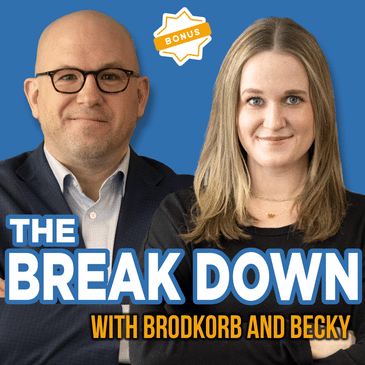
On this special bonus episode of The Break Down with Brodkorb and Becky, Michael Brodkorb and Becky Scherr break down the following:
- 00:01:22 - The role of campaigns in the democratic process.
- 00:07:15 - An explanation of why Michael and Becky have decided not to platform or conduct interviews with U.S. Senate candidate Royce White.
The Break Down with Brodkorb and Becky will return with a new episode next week.
Get full access to On The Record with Michael Brodkorb at michaelbrodkorb.substack.com/subscribe
[00:00:00] . Welcome to The Breakdown with Brodkorb and Becky, a weekly podcast that breaks down politics,
[00:00:16] policy and current affairs. I'm Becky Scherr. And I'm Michael Brodkorb. We are back with
[00:00:21] a bonus episode this week related to the US Senate race. In this episode, Becky and
[00:00:25] I discuss the important roles that campaigns have in the democratic process. We also
[00:00:31] detail our reasons as to why we've decided not to offer a platform or conduct interviews
[00:00:37] with Royce White, the Republican endorsed candidate for the United States Senate. Thank you for
[00:00:42] joining us for this important episode and we hope you enjoy the show. Becky, let's
[00:00:48] talk about campaigns for a second. Campaigns I think are a fundamental part of the democratic
[00:00:53] process. They provide platform for voters to engage with candidates, learn about their
[00:00:58] policies, values and visions for the future. I'm a Republican who has voted for a ticket
[00:01:05] in the past and I believe campaigns offer an invaluable opportunity for a dynamic exchange
[00:01:12] of ideas that greatly benefit all Minnesotans. First and foremost, campaigns are educational
[00:01:18] experiences for voters. They can offer a unique chance to hear directly from the
[00:01:24] candidates about their positions on critical issues. I think in Minnesota we really
[00:01:29] try to value informed decision making and this is an important part of that process.
[00:01:35] Candidates in the kind of nostalgic way that I think can use campaigns to outline their
[00:01:39] positions, explain their plans and respond to the pressing concerns of the electorate.
[00:01:45] This process I think helps voters understand not just what a candidate believes in some
[00:01:51] instances but also how they intend to address the challenges facing our state and
[00:01:57] country. Campaigns also encourage candidates to engage with the public in meaningful ways.
[00:02:06] You can do town hall meetings, debates, public forums. These are all essential to
[00:02:10] any campaign. These events allow candidates to connect with voters personally, answer
[00:02:17] their questions and listen to concerns. I believe that this direct interaction is
[00:02:22] vital in fostering a sense of accountability and transparency. I think it helps ensure that
[00:02:28] candidates remain responsive to the people that they seek to represent and that voters
[00:02:34] have a voice in shaping political discourse by participating. Campaigns can also be,
[00:02:39] for lack of a better phrase, a petri dish or breeding ground for new ideas and innovative
[00:02:45] solutions. The competitive nature, the pressure of campaigns can push candidates
[00:02:50] to differentiate themselves and present sometimes unique perspectives. This healthy
[00:02:56] competition can lead to the emergence of creative-eye approaches, policy issues,
[00:03:02] driving projects, progress and sometimes maybe innovation. For example, I think we've both
[00:03:07] done this on campaigns where someone might propose a novel solution to healthcare or
[00:03:12] education or economics. And those ideas might not have surfaced outside the pressure of
[00:03:17] a campaign or electoral process. Again, as someone who has voted a split ticket, I believe more and
[00:03:24] more about recognizing the value of considering candidates from across the political spectrum.
[00:03:30] I describe myself as politically homeless, but someone who aligns themselves mostly with the
[00:03:34] Republican Party. And I believe that this has led me to the belief that ideas and effective
[00:03:39] leadership are not confined just to one single party. I think this is an approach
[00:03:44] that could benefit Minnesota in fostering a diverse and well-rounded political landscape,
[00:03:49] not from just one party. And so by being open to candidates from different political parties,
[00:03:55] voters can, I hope, ensure that they are supporting the best ideas and capable leaders
[00:04:00] regardless of simply just political affiliation. And so I'm hoping that a vigorous debate
[00:04:06] happens between candidates because I think it's crucial for the help of our democracy.
[00:04:11] We would benefit from the debates. They expose strength and weaknesses of different
[00:04:16] policy proposals and help, I think, inform voters make good decisions. The other advantage
[00:04:22] of a debate is that it challenges candidates and incumbents to defend their positions,
[00:04:26] refine their arguments. I think leading to better developed policies. And it also
[00:04:32] encourages engagement among voters, which I think you and I are both advocates for in this
[00:04:38] vibrant democracy that we want to have this vibrant democratic process. When candidates
[00:04:44] engage in substantive debates and present compelling ideas, I think that they also
[00:04:50] inspire voters to become more involved. A more thoughtful debate will bring a more
[00:04:55] thoughtful voter. And this can help increase engagement, can lead to higher voter turnout,
[00:05:00] more representation, and also more of a sense of community and shared purpose.
[00:05:05] So when Minnesotans come together, I am nostalgic about campaigns and believe that they
[00:05:11] are a place where voters can learn about candidates, generate ideas,
[00:05:15] and engage in meaningful debates. There's theater. I participated in some of the theater,
[00:05:20] but they also serve as a good form to educate and innovate and bring democratic
[00:05:25] participation in the process. I consider myself again to be a Republican, but I look at it,
[00:05:31] the electorate broadly these days. And I hope that Minnesotans will benefit from a dynamic
[00:05:37] and vigorous debate on this campaign that will foster ideas for the betterment of the state.
[00:05:42] And so my hope this election cycle is that Minnesotans are treated to a robust campaign
[00:05:50] on a whole variety of levels. And I look forward to being a part of that process
[00:05:54] in our discussions with you in elevating those discussions and participation.
[00:05:59] I completely agree. One of the reasons I got into politics was to help, because in high school and
[00:06:05] college, I didn't think that my peers were informed. I think that there is something about
[00:06:10] talking to the people, making sure the voters have access to information and a healthy debate.
[00:06:16] I think debates are a great way for folks to really see one side versus the other,
[00:06:23] the differences and even some similarities between candidates if it's a pre-primary debate.
[00:06:30] I think that it is a really crucial part of the campaign process is to have folks willing
[00:06:36] to go have those conversations, go around the state, talk with voters at all levels,
[00:06:42] from rural Minnesotans, urban, suburban, talk to people from all different backgrounds and
[00:06:48] different organizations. We need to make sure that we are making ourselves, and again I'm speaking
[00:06:54] as we as Republicans, making ourselves and our mission and vision and messaging available so
[00:07:01] folks can make their own decision and hopefully come over to our side. I completely agree.
[00:07:05] I think that is what a campaign is meant to be and that's what I hope to see from all of
[00:07:11] our candidates. That's great. I'd like to transition for a second and talk about
[00:07:18] a conversation that you and I have had a little bit offline and we formulated and I'd like to
[00:07:23] frame up a little bit about an approach I would like to take involving Royce White
[00:07:29] and his campaign for the U.S. Senate and I'd like to get your perspective.
[00:07:33] Again, this podcast is a partnership. I want to hear from you and I hope in some ways you
[00:07:39] want to hear me but we have this platform, we have this opportunity. I'm very protective of
[00:07:44] the space that we've created. I'm very proud of the discussions that we've had.
[00:07:48] I think this would be the closest thing to a monologue I think I've ever done on the podcast
[00:07:52] but just to get your take on some things because I think it's important for the discussion
[00:07:58] that we're going to have going forward and I think it piggybacks a lot on what we just
[00:08:02] discussed about the role of campaigns. In politics, candidates for office are expected
[00:08:07] to exhibit, I think it leads a reasonable amount of stability, competence and a grounding
[00:08:13] and understanding of the issues that they will address. I have a desire to help foster
[00:08:19] political discourse and facilitate meaningful conversations has really grown over the last
[00:08:23] decade particularly on this podcast and on this podcast we have always championed an open dialogue
[00:08:29] and in exchange of diverse viewpoints. However, I think there is this openness has limits
[00:08:37] particularly when it comes to platforming individuals so I think their behavior and
[00:08:42] rhetoric indicate instability. I would like to choose to not offer a platform or conduct
[00:08:49] interviews with Royce White, a candidate whose actions and statements suggest I believe he is
[00:08:53] unfit for office. Stability and temperament I think in a political candidate are paramount
[00:09:01] as the responsibilities of serving an office require I think a measured and rational approach
[00:09:08] to problem solving and decision making. Over the course of observing Royce White in his campaign,
[00:09:15] it has become evident to me that his demeanor and rhetoric do not align with these essential
[00:09:21] qualities. I think he has consistently displayed erratic behavior that shows a
[00:09:27] disconnection from reality and this is not merely a matter of differing viewpoints
[00:09:33] but a fundamental issue of temperament and if I may say mental fitness.
[00:09:38] During my 30 years of observing, working and observing in a variety of roles in politics I've
[00:09:44] engaged with individuals across the political spectrum. I have never shied away from
[00:09:49] challenging conversations or conflict. Royce White's case is unique and his approach to
[00:09:55] campaigning and public discourse is not rooted in constructive dialogue or policy discussions.
[00:10:01] It's vulgar, it's harsh and it bothers me. It is characterized by inflammatory rhetoric and
[00:10:08] blatant disregard for facts. I think this approach not only undermines the integrity
[00:10:15] of the political process but it also erodes, I think it erodes the public trust in the
[00:10:22] overall electoral process. I think platforming a candidate like Royce White would be irresponsible.
[00:10:31] I think our podcast, speaking in my voice, is dedicated to fostering insightful and
[00:10:37] respectful political conversations and I have in some ways a shared duty to ensure that we
[00:10:43] amplify voices with our platform that contribute positively to political discourse.
[00:10:50] I think offering a platform to an individual who consistently demonstrates
[00:10:55] instability would not only detract from the quality of our conversation but it would also,
[00:11:01] I think, lend undue legitimacy to his candidacy. This is going to probably be one of the most
[00:11:08] challenging aspects of what I'm going to say but I stand by this. It is crucial to remember
[00:11:14] that not all viewpoints are valid especially when they are rooted in delusion and
[00:11:19] misinformation. That is something that is very important. Not all viewpoints are equal.
[00:11:25] There is also an ethical consideration of potentially exploiting someone's
[00:11:30] instability for the sake of content. We have a podcast and while having controversy on the
[00:11:37] podcast might drive lesser engagement, I don't think it's worth compromising our ethical standards
[00:11:43] or sometimes the well-being of the individual involved. I think Royce White's public statements
[00:11:48] and behavior raise serious concerns about his mental health. I believe very strongly it would
[00:11:54] be exploitive and in some ways morally wrong to feature him on our platform knowing that
[00:11:59] his participation might ultimately be more harmful than helpful. And again, it is important
[00:12:06] to recognize the broader implications of endorsing or legitimizing what I would consider to be
[00:12:11] unstable candidates. In a time when political polarization is at an all-time high,
[00:12:17] I think it's important for other media outlets and political commentators to draw a line
[00:12:22] on who they choose to platform. That's their decision to make and I'm not trying to get
[00:12:27] involved in that. But I think amplifying voices that contribute to division, misinformation,
[00:12:33] and instability only exacerbate some of the challenges our democracy faces.
[00:12:38] I hope that by refusing to not platform Royce White we can take a stand in helping there be
[00:12:46] the kind of political discourse I think we all want there to have, thoughtful, respectful,
[00:12:52] and grounded in reality. I think my reason for wanting to not platform Royce White is
[00:13:01] rooted in my commitment to ensuring that we have principled, responsible, and ethical engagement
[00:13:07] and political discourse on this podcast. I want to make it unequivocally clear that my
[00:13:12] decision not to platform Royce White is not rooted in fear. I'm not afraid of Royce White.
[00:13:18] My decision stems from a genuine concern about his ability to engage in rational and constructive
[00:13:23] discourse. Based on his rhetoric and behavior, I believe Royce White does not live in reality.
[00:13:29] His approach to politics is marked by instability and detachment from factual and reasoned
[00:13:34] discussion, which are essential qualities for anyone aspiring to public office.
[00:13:40] Moreover, I do not think Royce White is capable of listening and having a meaningful
[00:13:44] conversation. His frequent displays of erratic behavior and refusal to engage respectfully
[00:13:50] with differing viewpoints make it clear that he is not suited for the kind of
[00:13:55] substantive, thoughtful debate that our platform on this podcast seeks to promote.
[00:14:01] By choosing not to give him a platform, I aim to avoid amplifying his insanity and delusions,
[00:14:07] which would not only undermine the integrity of our discussions but also mislead our audience.
[00:14:13] This decision is about maintaining a standard of discourse that is grounded in reality and
[00:14:18] respect for the truth. And I think his behavior and rhetoric indicate a level of instability
[00:14:25] and incompatibility with the responsibilities of his office and the Office of Serving the
[00:14:30] United States Senate. I have a shared responsibility to promote constructive,
[00:14:35] meaningful conversations and not ones that undermine, I think, the very core and
[00:14:39] foundations of the democratic debate. And I understand that my take, my perspective,
[00:14:44] may be controversial to some, may be controversial to you. I have come to advocating for this
[00:14:50] position after consideration of his behavior, his rhetoric, which I don't think aligns with
[00:14:56] the standards of stability and responsibility that I would expect from a public official.
[00:15:01] Others may disagree with this assessment, but I think it's essential that we maintain
[00:15:07] the integrity of the discussions on this podcast and ensure that the voices we amplify
[00:15:12] are positively contributing to political discourse. I believe very passionately that
[00:15:17] we are committed to fostering a space for meaningful and respectful conversations,
[00:15:23] even if it means making a difficult decision, which I would like us to make and I'm offering
[00:15:27] my perspective on. And I would welcome feedback on my perspective, the decision that we
[00:15:35] eventually make here, your perspective, because I think that's vital to continuing this
[00:15:41] discussion. And I would always encourage people to share their thoughts. But my hope is that by
[00:15:47] engaging in this conversation, inviting the listeners to participate and offer suggestions on
[00:15:53] my particular perspective and also what you have to offer in your response,
[00:15:58] we are creating a more informed and engaged electorate. And that's my perspective.
[00:16:03] And I'd like to give you an opportunity to respond and agree, disagree. But that's the
[00:16:09] position I'd like to take. I appreciate you sharing that and leading this conversation.
[00:16:14] I do agree. I do definitely think that we do not owe a platform to anybody and us protecting
[00:16:22] this space that we have cultivated over a year and a half is important. I think that we've
[00:16:28] shown from everybody that we've had on, not everybody we've agreed up with. We've had
[00:16:35] some pushback on some things, but I think we always strive to have a place to bring
[00:16:43] new conversations and new information to people listening that they might not hear elsewhere
[00:16:48] and to just give them that swath of folks from all sides of the political spectrum.
[00:16:53] But never once have I felt uncomfortable in an interview. Never once have I felt scared or
[00:16:59] potentially that I was going to get attacked. It's always come from a place of starting of
[00:17:03] respect and let's be value added to both where we want to ask questions that get information
[00:17:08] and we want to provide our guests with a place to speak. When it comes to rice white,
[00:17:14] I share your concerns. I think that elected officials are held to be a higher standard and
[00:17:22] should be held to a higher standard. I don't think this is unique just to elected officials.
[00:17:26] I think there are different corporate executives, celebrities, different occupations across the
[00:17:31] board where you just are simply held to a higher standard and when it comes to politics,
[00:17:37] when it comes to government, I think one thing that has really eroded how we conduct business
[00:17:45] is the vitriol, is the instability of slings and slinging to poor words and attacks at each other
[00:17:56] and just the distraction. I think that there has been so much and we can look back to the
[00:18:00] Speaker McCarthy takedown of something that derailed our government for weeks on end
[00:18:06] and when we have these distractions and when we have people in positions, whether it's
[00:18:10] candidates or elected officials who are just going to be in that distraction era,
[00:18:18] America loses, Minnesotans lose and that's not something I want to be a part of. I want to
[00:18:23] find a way to continue to have a space that is productive, interesting conversations,
[00:18:29] providing resources and information and just civil dialogue to back into this crazy wild world
[00:18:39] that we've spent decades in. So I completely agree here. I think that it's unfortunate
[00:18:44] that this is the current candidate for US Senate. I think that there needs to be,
[00:18:50] there is a way to have alternative opinions. There is a way to be part of this anti-establishment
[00:18:59] screw the man kind of system. There's a way to do that and still be respectful to
[00:19:04] the folks around you. There's a way to have conversations with reporters, with podcasters,
[00:19:10] with voters without having to go down this wild little rabbit hole that I feel like
[00:19:18] happens when you look at and what we get from my swipe. And I just don't think
[00:19:24] it is something, I'm glad you brought this up because I just don't think it's something
[00:19:28] that we need to be a part of. It makes me feel uncomfortable to be a part of and
[00:19:34] that's, yeah, that's where I stand on it. I support it. I agree with it.
[00:19:38] And I want to keep this space what we've built over the last year.
[00:19:43] I appreciate that, Becky. I appreciate your support and you have some great insight
[00:19:48] as to your perspective on it too. I feel good about the decision. I would also say to you
[00:19:53] that I think that there's some larger broader issues about how Royce White got endorsed
[00:19:59] and party process things that I think we should discuss at some point. I don't think that this
[00:20:05] precludes us from ever discussing the Senate race or particularly Royce White's candidacy,
[00:20:10] but I think that we have taken, we stake out a position that absent there being a fundamental
[00:20:17] change in some of the responsibility that's in that operation, we're not going to platform it.
[00:20:23] And I think that's a really good decision that we've made here and I'm proud of the
[00:20:27] place that we've staked out because one thing I will say is that there is so much good
[00:20:33] that we could be focused on right now on this podcast and discussing.
[00:20:38] There are so many good policy discussions that we could be having about the direction
[00:20:41] of the state. There's going to be a great battle for the Minnesota House of Representatives.
[00:20:44] There's going to be a presidential race where Minnesota is going to be in there and
[00:20:48] we have views on that. And I don't think we should ignore the Senate race, but I think we've
[00:20:53] carved out a space that we're not in someone who are not going to platform and whose views
[00:20:58] we're not going to allow to come on this podcast and disintegrate what we've tried to
[00:21:04] build. And so I view this as a wonderful decision for us to focus on all of the good
[00:21:11] that's out there in politics. We are going to disagree on this podcast. We're going to
[00:21:15] have disagreements together. We got a football season coming up. There's so much good that
[00:21:19] we're going to talk about, but I'm really proud that we've put a fence around this particular
[00:21:23] subject and say that this is not where we're going to go. I think it's a great way
[00:21:27] to just pivot us into covering this election cycle and reporting as we're going to do.
[00:21:32] I'm very appreciative of this podcast space and you working with me and being a co-host
[00:21:38] and being such a good partner and fostering this space. And that's part of the reason
[00:21:43] I wanted to be protective of it because I think it would really dissolve it. And I'm so proud
[00:21:46] of the decision we made today. Absolutely concur. All right, have a great one. Thanks. Bye.
[00:21:57] We want to thank you for listening to this bonus episode of The Breakdown with Broadcom
[00:22:00] and Becky. Before we go, show some love for your favorite podcast by leaving us a review
[00:22:05] on Apple Podcasts or the platform where you listen. You can also leave us a review
[00:22:10] or give us a shout out on our website or across all social media platforms at BB Breakdown.
[00:22:16] The Breakdown with Broadcom and Becky will return next week. Thank you for listening.