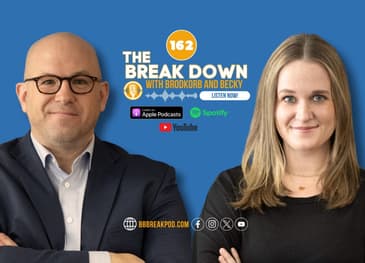
A Break Down on Campaign Cash and DFL Senate Primary Drama
The Break Down with Brodkorb and BeckyJuly 31, 2026x
162
01:08:4447.2 MB

A Break Down on Campaign Cash and DFL Senate Primary Drama

Becky Scherr and Michael Brodkorb preview Minnesota’s 2026 primary with a deep dive into fundraising reports covering January 1 through July 20. They note Sen. Amy Klobuchar’s massive advantage in the governor’s race, with $9.3 million raised and approximately $4.4 million cash on hand, compared with Republican candidates.

They discuss questions around Mike Lindell’s reporting and unlisted recent spending, and argue Lisa Demuth’s operation appears more credible and would receive a public subsidy if she wins the primary. They review other statewide and party fundraising totals, highlighting the Minnesota DFL’s large edge over the MN GOP.

The episode then turns to DFL U.S. Senate primary drama: Sen. John Hoffman’s claim that Angie Craig sought his endorsement while he was recovering, Craig’s denial and supporting texts, and Gwen Walz’s endorsement of Craig over Peggy Flanagan, with discussion of timing, messaging, and fraud politics.

The episode closes with an announcement of a primary-night livestream on August 11th!

00:00 — Welcome, Preview, and Fundraising Reports Setup: Opening remarks and a frame for the episode’s focus on campaign finance reports and what the money race reveals about the 2026 field.

01:24 — Governor Race Money Gap: Lindell, Qualls, and Demuth: A breakdown of the fundraising gap in the governor’s race, questions around Lindell’s spending, and what Qualls and Demuth’s numbers signal about their campaign strength.

15:51 — Prediction Markets, Downballot Fundraising, and Party War Chests: What prediction markets are saying about the governor’s race, a rundown of downballot fundraising totals, and the state of party and caucus war chests heading into the primary.

30:33 — Senate Primary Drama: The Hoffman Endorsement Allegation:The Senate primary heats up with an endorsement allegation involving Hoffman, Craig’s denial, questions about timing and documentation, and how campaigns should be responding communications-wise.

46:10 — Gwen Walz Endorses Craig and Fraud Messaging Fallout: A breakdown of Gwen Walz’s endorsement of Angie Craig, the political implications, and how fraud messaging is playing out and affecting the primary landscape.

54:40 — Banking Endorsements and the Klobuchar Seat Hypothetical: A look at the endorsement banking playbook campaigns are running, followed by a hypothetical discussion about what happens to Klobuchar’s Senate seat if she wins the governor’s race.

01:06:24 — Primary Night Wrap-Up: Final thoughts and a preview of what to watch on primary night.

The Break Down with Brodkorb and Becky will return with a new episode next week!


Get full access to On The Record with Michael Brodkorb at michaelbrodkorb.substack.com/subscribe

[00:00:11] Welcome to The Break Down with Brodkorb and Becky, a weekly podcast that breaks down politics, policy, and current affairs. I'm Becky Scherer. And I'm Michael Brodkorb. We are less than two weeks away from the 2026 primary here in Minnesota, and things are definitely heating up. First, we will chat numbers. Pre-primary fundraising reports are in, and we will break it all down. Then, it is clear we are officially in the pulling out all stops season of campaigns during the competitive primaries we have going on.

[00:00:38] We are going to start by discussing the drama in the DFL primary for the open U.S. Senate seat. This week, there were two notable developments. First, Senator John Hoffman claimed Angie Craig was seeking his endorsement while he was recovering from being shot, with one of the conversations being a mutual friend occurring while he was in the ICU. Then, Gwen Walls, wife to current Governor Tim Walls, endorsed Angie Craig in the same race for Senate, which brings drama of its own. Lots going on just days away from the August primary, and things are heating up day by day.

[00:01:07] Thank you for joining us, and enjoy the show. So, these are some of my favorite topics this week, Michael. So, I mean, I love a good drama. I love chatting numbers. So, let's break it all down. We have the state fundraising reports. They're in. They run from January 1st of 2026 to July 20th for 2026. So, in similar fashion to previous shows, we're kind of just going to run by race by race and see some notable—see what's notable.

[00:01:34] For a staff and governor, Senator Amy Klobuchar in the last seven months has raised $9.3 million. Oof. He has 4.5 cash on hand, and wow. That is astounding. 4.4. Right. 4.4—4.48 cash on hand. Yep. Mike Lindell has raised $725,000 this cycle—or since January 1st, has just under $88,000 cash on hand.

[00:02:04] We'll come back to a little caveat with some of that. Speaker leader Lisa Damath has raised $553,430 and has $456,000 cash on hand. Endorsed candidate Kendall Qualls has raised $411,000, just under $412,000, and has just over $67,000 cash on hand. So, man, you want to go first? What do you—you got some thoughts? I want to—I don't want to tamper your enthusiasm, so I don't know. So you get to go first.

[00:02:32] It's just what we've been saying all along, right? That Senator Klobuchar is going to be a fundraising whiz in this, and this certainly shows that. Regardless of what a Republican candidate with the most money has raised, that is incredible amounts for this race with somebody with her name ID. And, you know, the Republicans, unfortunately, just can't match up. Now, again, this is just candidate spending.

[00:02:55] It doesn't account for any potential third-party outside spending, but that would likely be happening on both sides, and who knows which one. All of the candidates on the Republican side, Democrat side, yet to be determined. But that is a tough pill to swallow. Nine—almost $5 million cash on hand as we're heading just two and a half months from the election. And she is—so let's talk about Klobuchar's number—roughly $4.4 million cash on hand.

[00:03:22] The highest Republican is Damath at roughly $450,000. So that's almost 10 times as much. Plus, as I noted on social media, Damath and all the Republican candidates are coming into a contested primary where they're going to have to spend that money. And then they're going to come out of the primary, and their reward will be going up against a highly organized and well-funded Amy Klobuchar. So when you saw these numbers, were you—did it—was it a pit in the stomach?

[00:03:52] Was it like—what was it? Yeah, I mean, I think it's hard not to be—have a little pit in your stomach when you see the verses here. I think it's certainly notable of the contrast between cash on hands as we head in here, especially as you noted that, you know, Republicans have a little bit more going on in their side in the next two weeks, 10 days, however far out we are at this point. So it's hard to not—to see that you're, you know, David versus Goliath a little bit there.

[00:04:19] But, you know, I—I think I've made it clear that I do—if in my—throwing my support and where I stand on the Republican side, I do stand behind Lisa Damath on this. And so I do appreciate that she has also been the only candidate that has agreed to the public subsidy. So she will get that $1.2 million a week after—if she makes it through the primary. Obviously, that is contingent, right? And she is the only one on the Republican side who did that.

[00:04:45] So that is a significant boost, $1.2 million right after the primary election should she be the one that moves forward. But that's still, you know, significantly less than Klobuchar has. It's—I mean, I think we've said it since the beginning of time. Klobuchar is going to be hard to go up against for anybody. She's got the name ID. She's got a strong resume and in her past on policy work and has continued to roll out more policy. And then just, you know, the numbers on their face, man. It's hard to ignore.

[00:05:15] It is. And it's tough because when these numbers come out—so these are the episodes that I love, too, because we can break down the raw numbers. Polling and fundraising totals are episodes that I love, particularly with you, because you're a nerd and you love to break it down. The problem that we're running into right now is that the numbers are just so stark. And we want to maintain our credibility in how we spend them.

[00:05:42] But it's tough to come on and just—and I mean, and we are, I think, both inherently not negative people. We want to be optimistic. We want to come in and talk about things that are kind of fun to talk about. But if you're a Republican right now and you're looking at numbers, this is tough. And what I struggle with is the—it's important that people get to make their data points. But I had a couple conversations with people after the numbers that came out.

[00:06:07] And I threw it back at them because they were saying, you know, Dameth is the only one—she has the most money and the only one in a position to win. I said, explain that to me. Explain me. And that's where I think there's a struggle. I will tell you, we should go back to the Lindell number because he raised the most, but he's spending it. He's spending a lot. And we should bring up the point about some of his expenses. Yeah. Yeah.

[00:06:34] So, I mean, since January he's raised the most, I think him and Dameth overall are pretty comparable of the cycle. But I think what's very notable is there—so this, again, is January 1st through July 20th of 2026. In the Lindell report, there were no expenses reported as of July 1st. So the last 20 days, which, again, were two weeks out here. This is including two, three weeks out from the primary election.

[00:06:59] No expenses reported, where apparently, according to a Minnesota reformer story, Lindell and his running mate, Philip Parrish, told the reformer on Tuesday that the campaign had spent about $200,000 recently, but it only got billed for the charges in the past few days after the campaign finance report period. The $20,000 in expenses should show up in the next campaign finance report. So if we assume that, obviously, yes, sure, there was some money coming in, but that would put him in the negative.

[00:07:29] That's a tough spot to be in. I think that—and not to be dismissive because it's not—look, I think there's some gamesmanship that goes around with reports all the time. But we're talking—now we're getting close to the primary. And it's one thing, like, you know, when you first launch, you're like, oh, I raised over this, and you sent out a press release. But there is a—that's a significant financial obligation that's not listed on his reports.

[00:07:57] And one of the things—I learned this on my first campaign. First campaign I worked with was Rudy Boschwitz. He was a hell of a fundraiser. And I learned that one of the best ways to show organizational support is by fundraising. And I have always—that's why—and learning from Boschwitz how he did it and how he maximized it, I have always, very early in my career, realized that where people put their money is an indication of support.

[00:08:26] And that's why I've always been an advocate for, I think there should be more spending in elections and better regulation, instant, instant, instant disclosure, all that type of stuff. But if he's losing that type of—if he's not—if he's not listing that much of his expenses, that is a serious issue because reporters, analysts, the media, and podcasters and others, we sit down and look at these numbers.

[00:08:55] And we're trying to have an—we're trying to give our listeners an informed discussion on where this race is. Fundraising totals is an indication of the organizational strength and how they're spending their money. And if a candidate is out of money, that is a legitimate issue that can be discussed. And if there is a possibility that Lindell's totals are off, that is a very reasonable point for a campaign and the supporters of other campaigns and analysts to say,

[00:09:23] are you in a position where you can run a race and run effectively against a well-financed Democratic candidate, which is going to be Senator Klobuchar, when you're out of money right now? Absolutely. I mean, and I think, you know, sure, there are definitely campaigns that coming out of the general election get right to that line or even go in the red and—or black. What is—I always forget which one is— Be the red. In the negative. But this is a primary. So the person who in recent polls is also in the lead is negatives.

[00:09:53] Could come out in August, right from the August primary, be down, I mean, 100, 200, however much. And again, this isn't like it's just one major expense that, you know, we don't have expenses for the last 20 days of this reporting. And so that could be—could include $500,000 in TD ads or— Books. Like him, books, and pillows. Or, you know, obviously mileage and signs. And apparently he's throwing pillows out at parades.

[00:10:24] Can't make this stuff up. But it's completely inappropriate. And again, it's not like it just seems to be if they had—you know, it would just be like one vendor didn't bill them in time or something. It's pretty sketch. Yes. And the one that I'm also surprised about is Qualls. Qualls' money. I mean, he's the Republican-endorsed candidate.

[00:10:46] And I think that we're seeing once again, this—the amount of money that Qualls has raised and how low it is shows once again that there is no magical dump truck that shows up to the Republican convention after someone's endorsed. And getting a whole bunch of support and a whole bunch of money. Right. And this is a—this is an absolute significant effort. And we'll see what happens in the primary.

[00:11:11] I get your point about Damath, and it's not insignificant, which is that she has signed the public subsidy agreement. Therefore, if she wins the Republican primary, she will get a checkpoint where she will get state funding to subsidize her campaign of roughly $1.2 million. There's also been an outside group, Restore Sanity, which has put around $2.6 million into the race to try to get her endorsed and through the primary.

[00:11:36] I think it is fair to say that on paper—and correct me if you think I'm wrong—that on paper, Damath has on paper the most solid financial footing than the other candidates. Is that fair to say? Yes. And the most credibility behind the numbers. I think that if Mike—I don't understand the Mike Lindell operation. And he just got endorsed by the—he got endorsed by the president.

[00:12:04] And there seems to be a lot of cash going through that campaign. He should be able to raise more money on a national scale based on his following, his connection to the president, and all that type of stuff that's gone on. And so I am a bit surprised.

[00:12:21] I think he is more of a gamble than—I think he is more of a gamble when it comes to fundraising because I do think—again, he outraised Damath, but there's this question about the expenses. And I haven't seen that type of fundraising mobilization that I would expect that would come with the president's endorsement. Is that fair?

[00:12:47] A hundred percent. I can tell you in my time, you know, working for different candidates in CD2 with Jason Lewis, like there's all of these different apparatuses when you have usually—whether it's you get the buy-in from the NRCC or, you know, there's WinRed that has you able to do all of these different things. I'm surprised there's not, and maybe there is, and it just was not successful, but either an email sent out to a Trump list on Lindell's behalf where they, you know, split some sort of payment.

[00:13:15] And I guess it's state federal, so that—I don't know really how that works in all of this. But it's just as surprising to me that even putting out on social and doing targeted ads, which I don't know, I just don't know if they have that kind of sophisticated apparatus, which seems really silly. But I just—there should be ways to totally capitalize on that.

[00:13:34] I mean, I'm thinking if a sitting president endorses you, especially somebody with this, you know, massive coalition behind them, I just find it hard to believe that, like, you couldn't get a quarter of a million, if not five—you know, more than that just on that endorsement alone. And it's hard for me to believe that something like that came in when these numbers are what they are.

[00:13:55] Yeah, and again, I think Damon's numbers are smaller, but there's more paperwork and credibility to back them up. You can talk about scaling out her operation to make it more because clearly no one's raised enough money. But the Lindell fundraising, what I'm looking for from the fundraising and also a little bit from Lindell is fundraising is also an indication, I think, of the professionalization of the operation.

[00:14:25] Again, we are saying that none of the candidates are raising the amount of money that they should. But I think I would feel most comfortable saying that the most professional operation is the Dameth operation because they're filing reports, they're listing what they're listing, and the numbers are what they are.

[00:14:42] What I haven't seen from the Lindell operation to date is an indication that it's professionalized and it can maximize on what's going on right now on the ground. I think you also, because in addition, I absolutely completely agree.

[00:14:59] And I think in addition to the money coming in, when you look at the money going out, I mean, again, I think you can starkly look at differences between these campaigns and see that we have Lindell, who's spending hundreds of thousands of dollars on his own book, on his pillows, where it appears that Dameth and even Qualls would seem to be spending it a little bit more on talking to voters, perhaps.

[00:15:22] And so, this one is so hard for me because some of the, again, I don't want to do a mass generalization, but some of the numbers that come from the Magdalene support that Lindell gained from President Trump, I just, are they primary voters? Are they going to turn out? That part is just, I mean, obviously, the only poll that matters is Election Day, right? We always say that. And in that voice. And in that voice, I seriously, you got to say it.

[00:15:52] But I don't know. I don't know. I think it's, there's a lot of numbers. There's a lot of things to take from this, but we will know in a few short days. The one thing I will also point out, and I find this interesting because it goes to numbers, is some of these prediction markets. I don't know how to read them yet. And I've been following them more closely, Kalshi and Polymart, about where they are in the governor's race, where they are in the Senate races. In interest of disclosure, I don't bet on these markets.

[00:16:22] I don't have an account. I don't use it. I don't engage in that betting on those markets. But what I'm trying to understand is the connection between some of those numbers. Because in the last week, I've noticed that the Lindell-Dameth numbers have swapped, where Lindell is now plus 60% on both those markets. What I'm trying to understand is that a phantom, is that real?

[00:16:50] You can look at some of the polling and show where the race is at, but does that translate into, and my only data point and why I'm referencing and bringing it up is because these fundraisers, again, in terms of elections are not just about being up in the polls and raising the most money. It is about mobilizing your voters to vote for you, either mailing in ballots, chasing ballots, going to the polls and voting.

[00:17:17] And there's a number of public data points that I don't know what the credibility is behind them. And so I'm documenting them on my social media accounts because I'm curious about it. But I'll be very curious, again, on election night, is does the polling that other news outlets and media outlets have shown about where the race is in the Republican primaries, does it match up with what happens in the primary?

[00:17:46] And then if you overlay some of those prediction markets, were they accurate? Now, I'm going to start this by saying I know almost negative about polling or about prediction markets and betting. And that is so like, it's such a foreign concept to me. I sat at a sportsbook. Yes, I played fantasy football with you. I know that. I sat at a sportsbook with my sister and her husband who are super into it all and asked all the questions. And it still, I mean, vaguely hit home a little bit.

[00:18:15] But for these Kelsey or whatever, you know, the prediction markets. Correct me if I'm wrong. That's based on people going there and saying, I think Mike Lindell is going to win. Right. So like is could it be because I remember if we're throwing this back to when Donald Trump had his first, you know, back in 2015, 2016, when he announced he was running for president and came down the escalator. You know, we literally had popcorn, you know, feet up on the desk watching this moment.

[00:18:43] Could part of it be that people just think it would be hilarious? Like people that aren't a vested interest in this, like my pillow guy is going to run for governor. Let me put, you know, 20 bucks on that. It is. Or is it? I don't really know. I have spoken to a number of people about that over the last couple of weeks. As I mentioned before, I think I mentioned in the episode with Billy and Will, I'd gotten a phone call from someone the Monday before Trump endorsed the week before, a couple of days before Trump endorsed Mike Lindell.

[00:19:13] And they said, hey, I'm thinking of throwing some money down on, you know, Mike Lindell and this thing. And they said, what do you think? And I said, well, interesting you bring that up. I just, I got just spoken to someone on the ground here in Minnesota that I trust. And they had said, keep your eye on Mike Lindell. He is coming up. And so I passed it along. I'm like, I don't know what that means.

[00:19:34] But, and I just kind of went back and talked to this person about what we've said on the podcast and all the existing public narratives, which I believe privately, which is that he's got a chance. And so what I've, and so I've spoken to him and others about these prediction markets. And while I do think there is some of that, like, look, I'll just throw it down because it's fun and it's entertaining. There are people do make money on this.

[00:19:59] And so you have, I, you would have to think of it from the standpoint of what percentage of these people are putting money down. I mean, they want to win it back. And so, again, it would be one thing if, I mean, if this was a hope and a prayer, but this is real money being put down and that people want to win back. And what I'm curious about, and I think it gets to your point, is are these people who are just observing things on the edges? Right. And throwing it down based on their state. From other states?

[00:20:29] Does it have to be, are those Venezuelans? Yeah. And is there a connection? Because that's the thing. Like, again, elections are not just won because your candidate is popular. You have to get them, you have to get your supporters to the polls and do things. Now, there is an argument to be had in Minnesota that if you were very popular in the polls because of our high voter turnout in general elections, you can generally expect to win. Doesn't necessarily always work out the way.

[00:20:56] And so, what I'm very curious about, getting to your point very specifically, and a good observation is, to what degree are these people on the ground? And is it a reflection of what's happening on the ground? Or is it a combination of people just like, yeah, this would be great if he won? Or is it a sign of a real mobilization? And I don't see, I don't see a ton. I mean, I see the pictures online, people at parades.

[00:21:24] I think it's fair to say, Becky, that whether you're in, and this is kind of unique, I think, not to take us too off topic, but if you look at pictures from Damath's campaign or Tafoya's campaign or Swarzi's campaign or Lindell's campaign, they have a lot of people at those parades and out there supporting them. Those are the things that I look for as more of like real people on the ground.

[00:21:50] And if you're having trouble getting supporters, I'm sorry, and Qualls has got people out there. All these campaigns have pocket, and that I think is unique this cycle, particularly because we have a multi-candidate field with multiple candidates running against the endorsed candidates. Therefore, we're getting, it's much more difficult to gauge.

[00:22:14] And so where I think it's been easier for you and I to come on and like handicap elections and primaries, this one is tough, really tough to do. I don't, I truly believe, and you've asked me this before, and I'll repeat the answer. If you asked me a year ago, I would have said, Angie Craig's going to win. I think Angie Craig's going to win the primary. I think it's an absolute flip of a coin. Yep. And on the Republican side, on some of those races, I honestly don't know what it's going to be.

[00:22:44] But I think that where I think you and I are doing a good job is we're breaking this down and asking each other questions. And again, the Lindell people are going to go out there and crow and say, they raise more money than Damon. But if you really, and that's what I think we can offer, we can look at the reports and say, well, there's possibility you left a bunch of expenses off.

[00:23:07] And then number two, there's a lot more of a fundraising work product in Damon's operation, plus with the outside group. That makes me think that she has, obviously has work to do, but she has the fundraising infrastructure in place to where she can, there's going to be less mystery in what she's able to do. Is that fair to say? I think so. And we're not getting into all of the policy of things. Maybe next week we can chat about it.

[00:23:37] But Lindell did have a pretty big flub that's getting a lot of attention with this amnesty stuff. And again, are we at the point where policy matters? Or is it just name ID? Are people tuned in, tuned out? I mean, August primary is so weird. People are getting ready for back to school, their last vacations. You know, there's a million things going on for voters here in Minnesota. And so it's just, it's so different than what we've seen with endorsed candidates coming in the lead and having the most money and all of that.

[00:24:05] So yeah, I, this one is a, is a mystery for me. I consider you to be more informed than I am about this stuff. And so, but I will say this about myself. I find this to be the election in the 30 plus years that I've been watching, observing, involved in Minnesota politics, where I cannot tell you what's going to happen. Do you feel the same way? Yeah, I mean, next week, next week we'll wade through maybe predictions ahead of the primary.

[00:24:35] But yes, the only thing I feel like I could maybe say is that I think it's between Lindell and Dameth. And I'm hopeful and optimistic that it's going to be Dameth. I, I, I would be hard pressed to put it in Qualls' Park, but crazier things have happened. I mean, really, just crazier things have happened. I said to someone last week, and I, and I've, I've brought this up before that I'm, I've, because we get, you know, you and I and people that are follow politics, guys, what do you think is going to happen?

[00:25:04] And I really stopped doing the predictions since Donald Trump beat Hillary Clinton in 2016. So what I weigh, I coach, I coach it now, as I say, I would be surprised if this happened. What I've, the determination I made on the primary is that I would be surprised if Qualls won. But I'm open to anything else. I can't make any other, it's the only kind of statement that I consistently say.

[00:25:33] Because the one thing I don't want to be accused of on the podcast, even though we get to come and push our agendas anytime we want, because it's our show, we pay for it, and we do the hell we want. But I want to, I always want to lean back into that fair analysis. And that's the only thing that I kind of feel comfortable saying is that I would be surprised if we're sitting here on primary night and Qualls won. I want to keep us going, rattle through a few more numbers here.

[00:25:57] It is just like, I feel like the campaign election anxiety, you know, butterflies in my chest. And one of those times that I am very grateful on the outside looking in because it's more excitement than dread and stress. But love the numbers. So Secretary of State Steve Simon has $509,000 cash on hand compared to $30,000 with Tad Jude. Attorney General Keith Ellison raised just under $750,000, has just, has $733,000 cash on hand.

[00:26:26] Republican Ron Schutz raised $406,000 and has $407,000 cash on hand. That one is for an incumbent versus none. It's pretty comparable, I got to say. Yes, of the down-ballot constitutional races on the Republican side, the one that I thought was impressive was Ron Schutz's numbers.

[00:26:51] And to that one, I think we've seen, again, this one is more looking towards the general, obviously. But we've seen Ellison, I feel like, be drawn into some more of these fraud and other, you know, kind of scandals. We've seen Schutz really kind of keep his head down and just be on the campaign trail. And yeah, I think that one is, the last couple of cycles, I feel like maybe we've seen, thought that that one might be one that could be the most competitive.

[00:27:17] But I'm, I'm, I like these numbers so far as we're sitting here today. Moving into state auditor, we have Scott Jensen raised the most with $110,000, has the most cash on hand at $60,000. Endorsed Nate George raised $44,000, has $23,000 cash on hand. And Democrat Zach, I don't even remember how to say his last name, I'm so sorry. Filipovic raised $60,000 and has $31,000 cash on hand. It's state auditor and none of that's so surprising to me.

[00:27:46] $23,000 is pretty minimal what you can do with versus even a $60,000. I mean, they're all pretty minimal for a statewide campaign. Can you even get a mailer? But that's where we sit. I think it is fair to say that it is a mixed bag for Republicans. And if you're looking at particularly some of the down ballot races and looking at the attorney general's race, I think that the, if what the Republicans need is a robust fundraising effort up and down the ticket.

[00:28:16] And that there is, as they would say in corporate speak, opportunities here to improve on that. Because there is a sizable advantage that the Democrats have. Yes. Speaking of, when we look at the state parties, the MNGOP raised just under $1 million, has $212,000 cash on hand. Democrats, a DFL, Minnesota DFL raised $7.7 million and has $3.5 cash on hand. Pretty hard to look at.

[00:28:41] When we look at the House and Senate caucuses, they are definitely a better outlook here. We have House GOP raised over $1 million, has $1.65 cash on hand. House DFL raised $2.8 million, has just under $2.5 million cash on hand. When we look at the Senate, they raised $1.5 but have $3.2 cash on hand. And the Senate DFL has just under $3 million raised and $3.6 cash on hand.

[00:29:10] So the Senate, pretty close in their cash on hand numbers. And the House, I think, also decently comparable. I mean, obviously less, but, you know, $1.6 cash on hand is notable. I'll take it. These are the type of numbers that should be raised by the Republican candidates that are running statewide if they can, because they're spending limits in some of the down ballot races.

[00:29:33] But this, if the House GOP can raise $1.6 and the Senate GOP can raise, you know, $1.4. Sorry, if they can raise just over a million and the Senate GOP can raise $1.4, that shows that there's money out there that can be had for these candidates. And I also will tell you, because we always want to make sure that we're not coming on and being depressed every time about the kind of the fundraising numbers.

[00:29:59] I think that this, these, these fundraising numbers at the legislative cycle, I think not to discuss too much production on air, but we should start focusing on some of these legislative races and talking about some of these matchups. Because I think that's where I think a lot of the, I think we're going to see a real disparity at the top and these down ballot races, particularly the legislative races, where a lot of the action is going to be. We should be talking about it more. Absolutely.

[00:30:28] I mean, the split is so close and these races are, I cannot even put numbers on what I think some of these top legislative races are going to be spending. It's going to be, it's going to be pretty wild. So I absolutely love to move into that and I'm on it. Senate race. Senate race drama. This is like the drama in the Senate race the last week is like right in your wheelhouse. It is. You know, this is again where I love this season of campaigns from the outside.

[00:30:58] Not while I'm in it. Because let me tell you, I've lived in it sometimes and yes, it is tough. Whiskey has been had. But I'm on the outside looking in. And so we're going to start in the U.S. Senate DFL. Again, this is the Democrat primary for the U.S. Senate open seat here with between Angie Craig and between Congresswoman Angie Craig and Lieutenant Governor Peggy Flanagan.

[00:31:21] So we're going to start with kind of this drama surrounding Senator Hoffman on Friday at a campaign rally for Peggy Flanagan, Senator John Hoffman. Again, as a reminder, he and his wife were brutally attacked, shot in lots of recovery by the same man who assassinated Hortman and her husband and their dog. And so he, at this campaign rally, said that after they were shot, Angie Craig sought his endorsement for U.S. Senate while they were still recovering.

[00:31:51] While on stage, as it's quoted in the press, said, He contested that by saying Peggy Flanagan just simply checked in on the family because she cared. Let's just start with just that before we even get into the Craig response. What? What was your thought when you saw this rolling out over the weekend?

[00:32:20] I was like, wow, they went there. And I thought it was, it was a, I mean, it is a, it has certainly spun up the campaigns. It's been in the news. It's been on Twitter, Blue Sky, Threads. Has it been on Pinterest, Becky? Not to my knowledge. That's a political free zone for me. Is it really? Recipes and kids crafts, man. Okay. But it's, it's spun up. What was your take? I mean, okay. When I heard it.

[00:32:50] Yeah. No, go ahead. When I first heard it, to me, I thought, if true, I looked at it how I would, how I thought it could potentially go down. And I've had friends who have gone through tragic situations, lost children, lost spouses, lost family members, gone through really horrific things. And in my experience, when you visit them, whether it's in the hospital or at home, you give a little bit of time usually to the issue at hand that you're recovering from being shot.

[00:33:20] Other than that, you pivot. You talk about everything else, right? Like, we're talking about the sky is blue. The twins won yesterday. Vikings new quarterback is looking great and all of that kind of stuff. And when you're an elected official and in politics, do you not? Like, to me, I'm thinking, because this came out, then it was Paul Wellstone's son, Dave Wellstone, who allegedly was the friend, not allegedly, he claimed on said yes. But, like, I could see it as going in and you're visiting your friend, Senator Hoffman, and having conversations like, hey, man, you know who you're going to endorse for U.S. Senate?

[00:33:49] Are you going to get into it? Like, just having a conversation, not an agenda item of why he went and saw him. That's how I kind of took it. Like, I felt like it could be that. Again, this is purely speculation. I was not there. They obviously took it quite differently. And that, but it is, I mean, this is mudslinging at its finest. This is personal and harsh. Can we note the Craig response before I offer in? Yes. Craig said. Go ahead.

[00:34:17] Craig said, called the allegation categorically false. She also told reporters, quote, this is questioning my personal integrity and I simply would never do that, never do what has been alleged that I did, end quote. Her campaign released screenshots of text messages, June 14, expressing sympathy and saying that her and her wife were praying for the Hoffmans. The next political text wasn't until after August 5th, after Hoffman had resumed making political endorsements.

[00:34:45] Craig argues those texts prove she did not politicize the immediate aftermath. Hoffman rebutted it and said those texts don't address his allegation. His point isn't that Craig texted him from the ICU. His allegation is that she is the mutual friend, that the friend approached him twice, once in the ICU, once again while recovering at home. His wife vouched and claimed it was David Wellstone, son of late Paul Wellstone, as we discussed. And so let me, let me give you my take, if I may.

[00:35:12] First of all, and please, as always, push back, even though you need no permission to do so. Push back. I have a very difficult time believing that someone with the political acumen of Angie Craig would dispatch someone to an ICU to ask Senator Hoffman for an endorsement.

[00:35:34] I am not calling Senator Hoffman a liar or saying that his story isn't what he believes. But I just have a very difficult time believing that Senate, that Congresswoman Craig would dispatch someone to do it. I do believe what you described was very likely what could have happened and what Angie Craig's story said happened has happened.

[00:36:03] Now, that doesn't mean that the Hoffmans don't believe what they're saying. And I'm not saying that they're not. But I just am really challenged by the fact that Congresswoman Craig, who is, has an incredibly significant, robust and sharp political operation, would literally send someone in to an ICU and ask them to endorse. It's possible to me.

[00:36:30] To me, what makes the most sense is a mutual friend did it. What makes me. So what makes me kind of again want to be very respectful. It wasn't there, but what made me question this is the timing of this. The timing of how this was brought up was on stage at an event.

[00:36:52] That means that this story has been held and cultivated and brought out theatrically at a moment in which to cause turmoil, not to be as neutral as I can turmoil in the race for U.S. Senate amongst the Democrats. And one thing that I will note is the word contemporaneous. What was the contemporaneous documentation about this incident?

[00:37:21] What was done in the moment? Where's the text message saying, you sent someone to the ICU? When I'm, where's the outrage? Where is this happening? Right. And, you know, I. Or a text to a friend saying, you'll never believe what just happened. Yes. And I just want to just offer a little aside here. I wrote an award-winning true crime book, which I hardly ever talk about on this podcast, but I did. And I was in the courtroom once. And I learned the concept of documenting contemporaneously.

[00:37:50] The judge in the case, there was an allegation that one of the parties was making about incidents of abuse and other stuff that happened. And they were trying to reintroduce it as, in essence, without much foundation. And the judge, without the jury there, was saying, look, I understand you're trying to bring all these incidents in now. And you're upset about them and you're claiming this happened. But what did you do contemporaneously to document these incidents? And I remember, to this day, I have horrible handwriting.

[00:38:20] But I remember writing out the word contemporaneously in my notes and circling it. And it stuck in with me that when these type of incidents happen, documenting it contemporaneously helps validate something you may want to bring up down the road.

[00:38:36] And what I look at through my lens and kind of the same lens that you are, if I may, is if this happened and you were so outraged and it was so appalling, where's the documentation in the moment that it happened? And it seems to me that this story was cultivated and then used at a point in which it could have maximum effect on the primary between Craig and Flanagan.

[00:39:06] Is that fair to say? I think that's very fair to say. I mean, and I think good reminder to all because that was part of what eventually took down Graham Plattner, right? Is this woman who came out with the last round of allegations had like a conversation with her therapist that was able to be, you know, looked at and, you know, like had text messages and all that kind of stuff.

[00:39:27] I mean, it is absolutely valid that you think that if it was something that came out in that way, yes, that there would have been some outrage, an email to somebody, a text message to somebody else that would come out and say, I had this conversation, I have this, you know, they texted me and thought it was appalling. And I think this kind of goes to the general principle of, you know, you have your truth, my truth and the real truth. And in this situation, we have the Huffmans saying that this happened in the ICU and later at home.

[00:39:55] Craig kind of saying, I never sent anybody. That didn't happen. And Dave Wellstone saying he talked politics with his friend and generally alluded to Angie Craig, but, you know, nothing in the ICU and nothing about a formal endorsement. And so it's just, it's definitely hitting the personal side of things just weeks out. Because as you mentioned, this is now 13 months past this incident allegedly occurring, and we haven't heard about it in 13 months.

[00:40:21] And again, it also, like you said, with Craig's, her apparatus and how she's running this campaign, does it seem like 13 months prior to a primary? She would make sure she was Johnny on the spot to get an endorsement in June of 2025? I don't know. It's just, who are we to judge intent and all of that?

[00:40:40] I'm just saying, I think when I first read this, when I first read this, I really just thought it was like believable that Dave Wellstone or whoever named at the time had gone in and had a conversation about the races as they were shaping up and all of that kind of stuff. And I don't believe that that was like sent on behalf of the Craig campaign. But is this something, well, we'll come to questions maybe after we get through the next piece of drama.

[00:41:07] Can I ask though, this is when we, I knew we were going to discuss this. I waited to ask this on air. If you were with the Craig campaign, how would you have responded to this? I mean, I think what she said made sense. Categorically false, didn't happen. I wouldn't do that. It's hard when you're trying to prove something didn't happen, right? Like there's only so much you can do. And she released the text messages.

[00:41:31] I think that is kind of counters him pushing him to your point to really some sort of text message that it did happen. Like, well, on June 20th, I texted George and told George that Craig sent her minions over to try to get my endorsement. Do you think that her response leveled the playing field, made it scale? Or if you are someone, let me ask it this way.

[00:42:00] If you are someone who has just landed on planet Earth and you're reading about this situation, who do you think comes out better in this situation? Hoffman or Hoffman's side or the Craig side? I mean, I think the Hoffman side, just because I feel like we're in such a day and age where people read headlines, right? You go to Star Tribune, you scan all those headlines and click on the one you wanted.

[00:42:24] And so, you know, I don't know that the headline is Hoffman accused Craig, you know, of this during the ICU and Craig denies. I think it probably is just the allegation. And then the story talks about Craig's position on it. And it's just one that like, I think people kind of hate politics and hate elected officials enough to also, you know, like if this was a lawyer, you know, an ambulance chaser.

[00:42:50] Like it's just one that you kind of do go into it with a little bit of pessimism and you're like, yeah, sounds about right that somebody would do it when somebody else is in the ICU. Yeah, I don't. One of the questions that I've spoken with some folks about is Craig's response and do you swing at it? And what would have, what if she just would have said, John Hoffman is a hero. He and his family are heroes for what they have gone through. My thoughts and prayers continue to be with his family during this difficult time as they continue the road to recovery.

[00:43:19] I disagree with his characterization of events, but I wish him and his family nothing but the best. And just because she swung at the pitch that John Hoffman threw. Yeah, you're fair. That's fair. And what you could do is sometimes in these situations, just let it go over the plate and have it be a strike or and then go up and bat again at a later point. But it seemed that they, it turned into a he said, she said.

[00:43:42] Now, one of my very good friends, his, one of his comm strategy is muddy the waters, shiny object. And now it's a process fight rather than one side. But I, I just, my immediate reaction was two things. I have some doubts that because I do believe that Congresswoman Craig, part of her success has been her political acumen and judgment.

[00:44:10] Number two, I wouldn't have maybe swung at the pitch. But number three, the fact that this story was held for so long for, I think you did the math, roughly 13 months. That means that that's 13 months to deal with this privately. To me, it seems like you knew that you had a grenade that you wanted to throw out and you waited until the right time in which to do it. Or kept it in your back pocket to see if it was, right? Do I need to pull this pin or not? Yeah.

[00:44:37] And I think, because I think we have seen them, the Flanagan campaign, chip away at some of the policy stances of Craig and, you know, talk about some of the principles of her as an elected official or as a candidate. And so this is a new kind of attack, obviously, on the personal side, the integrity. And I think that's something that Angie Craig has worked really hard to portray in her almost decade now in Congress.

[00:45:04] And so I think that's something that her response to me, I don't know a staffer that like, I could see as a staffer wanting to do what you pitched, she respond. But this being overruled by the member here and them saying, I got to protect my integrity. This is absolutely wrong. I am pissed, right? I got to say something. And so typically in my experience, you lose in those situations as a staffer.

[00:45:31] I am also someone, and may not believe this, I turn the cheek a lot. And I don't discuss publicly one-tenth of the crap that I have to deal with. But sometimes you just need to send a message and swing it back. And I can see both sides. And I think you've laid it out. And again, I know there's drama, and this is a podcast, and we've got to get clicks and downloads and all that type of stuff.

[00:45:57] But I really, what I was interested in talking about this, aside from the back and forth, was how, because I think you are, hands down, one of the best comms people in this state, PR. And I was very interested in seeing what your response would be. That's what, again, taking out the personal drama, the professional discussion about how you would have responded. I learned things from that.

[00:46:20] Well, and I think your angle of muddy the water, shiny thing are valid, because I do think that the Craig campaign came out with their shiny thing, you know, a couple days later here. We have the First Lady, Gwen Walls, endorsed Angie Craig this week. Congresswoman Craig this week. Very notable. Governor Tim Walls, who has said he is not endorsing anybody, about to stay out of it, which means, you know, we've seen Craig before swing at the fact that Flanagan, who is Walls' current lieutenant governor, she is running for this,

[00:46:49] has not received the endorsement. And now, not only did she not get Gwen Walls' endorsement, Angie Craig did. I think this is notable for a few reasons. First, Gwen Walls, in her endorsement, said that Angie Craig is the candidate to beat the Republicans and win in November. She begged Craig's ability to win difficult suburban races and argued that Democrats need someone who can win both red and blue counties. Which certainly goes to what Craig is pushing as why she should win the primary.

[00:47:18] I think kind of counter to, like, again, your own husband's running mate, who obviously also kind of showed that she could win some red and blue counties if they, you know, were elected, I guess, maybe not win red counties. But it's just, it's for someone, it's not like Gwen Walls has also been super out there politically doing these sort of things aside from her husband, right? We see her on the campaign trail with her husband, you know, around the state or some other candidates when he's assisting.

[00:47:46] But it's not, I mean, if you know different, please let me know. But I can't point to many times or any times where Gwen Walls has stepped into a role like this, not only when her husband is staying silent, but when it's so close to her husband's orbit. I thought that the Gwen Walls endorsement was more significant than the dustup with Hoffman.

[00:48:14] As much as I may have had a different calibrated response than the Craig campaign, I do think the issue was muddied. To pivot to this and to get the first lady to pick not her husband's lieutenant governor, who he has been elected with twice statewide on, but to pick Craig. When I read it, I'm like, damn, that's aggressive.

[00:48:39] And it wasn't as if the first lady said anything rough or obnoxious or she just staked the flag and was like, I'm with Craig in this race. I also think from, you know, this is, I completely agree, because I think the Hoffman situation is certainly slinging mud. This is significant to me.

[00:49:03] I mean, this is something that we've already seen Angie use this line about, you know, my colleagues have endorsed me. Your colleague, Governor Walls, hasn't endorsed you. We've seen her kind of chipping away at that narrative. And now this comes in. And again, this comes on the heels of speculation that we talked about at the end of or after the 2024 election, when there was some alleged tension between Walls and Flanagan because Flanagan was acting as governor while Walls is on the campaign trail.

[00:49:33] The thought was if he was elected as vice president, she would step into that role. So she had conversation. She spent some money. She did some things allegedly and that there is tension there and that never has really seemingly gone away. We haven't really seen them. There's been events that they typically did together that they haven't. So this kind of just pours a little bit more fuel on that fire of there definitely being some tension there.

[00:49:58] I mean, I think it's hard for you to be in the Flanagan world and not have that be the narrative here. Correct. So one of the questions that I think that this comes down to, and I think we're seeing this kind of, you know, there was a debate between Flanagan and Craig on NPR earlier this week where they got into some issues and they've had a substantive series of debates.

[00:50:21] What I find interesting is what impact this will have on the race, particularly from this standpoint is, and correct me if you think I'm wrong, there is a couple type of endorsements you want to get. You obviously want to get endorsement from elected officials and people of significance, but there's also messaging endorsements. Gwen Walls is the first lady of the state. She is not an elected official.

[00:50:48] And so that kind of endorsement from kind of inside the governor's mansion coming out shows it is, again, it's not a significant mobilization endorsement. It is a significant, I would call messaging endorsement. And in terms of because it reinforces a message that there is problems with the dynamic between the governor and the lieutenant governor, number one.

[00:51:17] But it also has the potential to tie into an issue that Craig has been discussing with much more zest and something that we've discussed is that the issue of fraud. And again, we, I think we accept the premise, correct me if I'm wrong, that the governor got out of the race because the race would have been closer at the top and there would have been some down ballot issues and how him running at the top, particularly on the matter of fraud, would show up.

[00:51:46] I still believe the governor would have won, but it would have been a much tighter race and we'd be talking about a much different dynamic. Anyway, we have consistently said, and I've said that fraud in relation to Flanagan being the U.S. Senate nominee, if she is, brings that front and center. And I wonder to what degree people can extrapolate this out and say that the first lady is in essence saying, look, on matters of fraud, you're not going to want to go with Flanagan.

[00:52:15] Now she can't come out and say that because the reason why she's Flanagan is dusted up on fraud is because what happened in the governor's administration, Gwen Walls' husband. But it brings up a whole, a whole number of issues.

[00:52:30] And I think that the messaging, even though the first lady didn't say it, I believe the messaging that specifically about fraud was, Gwen Walls was telegraphing, if you are worried about fraud becoming an issue, don't vote for Peggy Flanagan. I didn't look at it that way.

[00:52:51] And I think as you're saying that, my head is kind of spinning to say, not only is that true, but does this also maybe give Walls a little bit more distance too, right? Like if Flanagan was the candidate, this is going to be, I mean, fraud is still going to be a top issue as we have to let you go. Correct, no question about it. But does Peggy, does Craig winning and Peggy not being the candidate eliminate a little bit of the Walls of it all? Right?

[00:53:16] Like, because if Flanagan wins, okay, so if Flanagan wins, everybody's going to say Walls in Flanagan, Walls in Flanagan. Correct. Walls' name continues to get dragged into every conversation about fraud. Without her in the race, fraud is still an issue. There's still a lot that needs to be done. But is it less about Walls' name attached to it when his running mate? Isn't there? You know, like it maybe gets him a little bit more cover. Absolutely fantastic point. I only thought of it because of your fantastic point.

[00:53:45] So, I mean, I just, that to me makes sense that here's the deal. I, in any endorsement, in any announcement, I am the ultimate wanting to pull out all of these. This is what I love about it is trying to find those little, nothing happens as coincidences. This is not, this is fully thought through. I, the biggest question I do have, though, about this is being so close to the primary. With both of these things here, we have people already have, who have already been voting for two weeks.

[00:54:13] We are, you know, out from the election. Was this in the works? And Craig campaign was, I mean, obviously it's been in the works. But is this something they were holding in their back pocket for a time they needed that shiny object? Did they want it to be this close to the election? Was the Hoffman stuff a reason for when, say, all right, I'm coming out. This is ridiculous. I'm doing, like, I just, those are the things that I want to know is when did she agree? Did they have this just holding, waiting because they knew something was going to happen, that they would need a good pivot?

[00:54:43] But, I, we're never going to know all of that. But I think, I think you've identified it in my, my answer would have been all of the above. Yeah. Because, a couple things, and I've said this before, I'll repeat it again. One candidate who ran for statewide office, who I did, I think conducted a master class on endorsements, was Al Franken when he ran for the U.S. Senate in 08. I was blogging at the time and doing a bunch of stuff, and he was dealing with story after story after story.

[00:55:10] And we would get through situations where we, we would think we would dust it up Franken. And then Franken would come roll out with a couple more endorsements, a couple more endorsements. And what the endorsements, what those endorsements did is it, it recalibrated the race and it created momentum that people were still sticking with Franken despite what was going on.

[00:55:31] And I have long advertised, I have long suggested to candidates, after seeing the way Franken did that, that they should line up endorsements and not release them all at once, but bank them to build individual stories. We saw after the primary, some candidates go out with 200 some people that were endorsing them. I would have, I wouldn't have done that. I would have done 10 at a time, 10 at a time, 10 at a time, and shown the, shown momentum and use it at opportunities.

[00:55:59] I will tell you that I have a feeling, and I'm going to be more specific. I have a feeling that this happened, may have happened because of the Hoffman situation, but it doesn't take away from the significance of the endorsement. And again, what I'm saying is significant is the first lady is not an elected official. She, her husband is, her name does not appear in a ballot.

[00:56:23] And her weighing in on this race against picking the candidate that her husband did not pick, picking the candidate running against the candidate that her husband picked to be his running mate twice and helped him get elected.

[00:56:40] Which I think is fair to say, going back through our archives, we've consistently said that the selection of Peggy Flanagan helped boost Wall's progressive credentials and absolutely helped him not only win the primary in 2018, but put him on a trajectory where he was successful, where he was on the national stage.

[00:56:58] I think it, but for us analyzing it, I also believe that it does, as you precisely dialed in on, if the Lieutenant Governor is not on the general election in November, there is absolutely no question that fraud is less of an issue. If she is, if the Democrats nominate Peggy Flanagan to be the candidate for United States Senate, fraud will be front and center in this race.

[00:57:25] Because I do not believe that the Lieutenant Governor has successfully answered the age old question. What did she know? When did she know it? And what did she do? And I think Craig is absolutely spot on in saying that fraud will be an issue. It will consume the race and it will be an issue. I also think that Craig is the strongest candidate to run statewide for the DFL.

[00:57:51] Possibly, and she has the potential, if elected, to start building a brand like Klobuchar has, but particularly of the candidates running for the U.S. Senate. And so I think it's been absolutely fascinating to watch. And I don't know, I'd be very curious to see, and obviously, let me just be clear, there is no question that getting an endorsement from the First Lady of the state of Minnesota is a net positive. No one will say that.

[00:58:18] What I'm just curious about is, it's an unusual endorsement from the standpoint is it doesn't represent an elected official. It doesn't represent an organization that organizes behind it. It's not really a celebrity endorsement, but it is a significant political endorsement from a non-elected official that you can get. Absolutely.

[00:58:43] I mean, had it be, obviously, if it was the other way and she endorsed Flanagan, one would be like, well, yeah, your husband's running mate. It makes sense. This being counter to that, I think, is a big part. And now I want to have a longer conversation about this later, but I just want to go into it because we're so close to the primary. And after the primary, we can have a bigger conversation. But I started this last week. So let's go on the assumption here. Let's say we have Senator Amy Klobuchar, who is elected governor.

[00:59:12] Her seat thus becomes open. When you look at these two candidates, Craig and Flanagan, if we come out of the primary, I am speaking in hypotheticals and I'm so sorry, let's say we come out of the primary with DFL candidate for U.S. Senate Flanagan, that Craig loses the primary, I would say, so I'm going to, I'll give my opinion before asking yours. I would say Craig's a shoo-in for Klobuchar's seat, right?

[00:59:38] I don't know that if Craig comes out of the primary, the same as is there for Flanagan, that she would be a shoo-in for Klobuchar's open seat. I just, I think that there's, in the circles they run in, again, the walls of it all, because we've talked about, well, technically it could be the seat appointed after Klobuchar takes office in January. Typically or historically, I think it would be handed over to Governor Walz to do before he leaves office.

[01:00:06] Do you have any thoughts on, I mean, we can have a larger conversation of who's on that short list later, but just amongst these two. The reason my face is making those faces is because I've never thought harder on one of your questions, and I don't have much of a poker face. You made the statement, I want to make sure this is right, that if Angie Craig were to win the nomination and win the Senate race, or let me say it this way, you think that depending on who wins the primary,

[01:00:36] because there is, and let's lay the table, there is a discussion point that's going on, which is that there is, I think, an assumption that people are making, that if one, that the loser of the candidates running on the DFL side, once Klobuchar gets elected, that she will appoint one of them to fill her remaining seats. That's what you're saying. I'm saying, I think if Craig loses the primary, she would appoint Craig, or Walls would appoint Craig. I don't necessarily believe the same is true

[01:01:05] if Craig wins the primary and Flanagan loses. I don't necessarily think that she is a shoo-in to get that open sentence, or to get Klobuchar's sentencing. I could not agree with you more, and it is amazing to me that has not, that in all of the conversations, and I'm so proud of you for bringing it up, no one has raised that before. Really? So just to make sure our listeners are following, because this is turning into like Back to the Future 3 when they're trying to explain

[01:01:35] when there's two Marty McFly's running around. And if you don't know that reference I just made, damn you for being too young. So again, just help me walk through this. Yep. There is a narrative on both sides of the aisle that Senator Klobuchar, once she becomes governor, will appoint the loser of the primary to her fill her vacant seat. Now, you can disagree with whether that's true or not, and a lot of people do, but it is a discussion that's going on. Yeah. Either her or Walls.

[01:02:04] Somebody, there is an open Senate seat that somebody will have to appoint. It'll be her. She won't go to Walls, because she would have to step down, which she may do, but we'll see. But let's assume it's Klobuchar. Your argument is, is that all things being equal, that it's more likely that Craig, if she lost, got appointed, than Flanagan, if she lost, got appointed. Right. That is an absolutely amazing point. Never been discussed,

[01:02:33] I think, ever before in Minnesota politics until you by now. You are absolutely spot on. I just think we will, if the likelihood of a Senator Craig, I think is extremely high, and with two spots. I will tell you, though, that I do not believe that Klobuchar will pick the loser of it. I don't think that that's going to happen. I think she'll pick someone outside of that lane. I just feel like Craig is such a,

[01:03:03] would be such a great part of her, I don't know. That is. She'd be a great advocate for the Klobuchar world agenda. That is the most astute political point that you have ever made, that I've heard. Dang, because I've been thinking about it for weeks now. That you, so you, your argument is, is that all things being equal, and a governor, Klobuchar, has to pick either Angie Craig or Peggy Flanagan. You believe it's more likely that she would pick Angie Craig.

[01:03:33] 100%. That is absolutely fascinating. Because again, also, the Walls world, I think that there is, you know, there's that. There's the Klobuchar-Walls connection. There's all of this. I just feel like, with the Gwen Walls endorsement, with some of the stuff we've seen, that they would rather not have to deal with Peggy Flanagan in an elected office. The Walls world, the Klobuchar world, that sort of centrist, democratic, or however you want to look at, but that kind of orbit. It would be easier if she just was not elected

[01:04:02] and didn't have to, because eventually, right now, I think there's some coverage of the Walls drama because it doesn't behoove Flanagan to talk crap on Governor Walls, right? I mean, there's a fine line there. That's fantastic because... If she's a senator, I mean, does that still exist? Or can she come out... If you are looking for a clean break on the issue of fraud, you want... And from your tension with Flanagan? Yes. You want... That's an absolutely fantastic point.

[01:04:32] The other reason why I don't think it would happen is because... And is Flanagan... Look at Klobuchar's pick for Lieutenant Governor. Absolutely the perfect type of pick that you want. Do no harm, cause no trouble, and it appears that she picked someone that she could work in a collaborative way with. It seems to me... And she made a decision not based on, I think, a political calculation because of where she is in this race.

[01:05:01] I think that Senator Klobuchar's has a reputation of... And I know that there's been talk about interpersonal skills and stuff, but she... The way she is... Kind of no nonsense and not interested in drama and BS. And again, I know there's been some stories out there, but if you think about it over the totality of how long she's been in office, we haven't spent... We've discussed some of those issues, but I would think that being governor

[01:05:31] and then the relationship that exists and then... Cause here's the thing, she would be appointing it. So that's the connection. If this was a situation where she was independently elected, that would be one thing. But if there is an appointment that happens, then in this situation, that is literally a decision that she's making. And based on the timing, will be one of the most significant decisions she makes. Because if she makes the decision, if she makes the decision,

[01:06:01] she steps down and fills that appointment when she's governor. That is one of the most significant appointments she will make over the entire term of her time as governor. And she will make it within minutes very quickly of being sworn in as governor. And if she brings in someone that is owning... Someone who is... There's still unresolved questions about fraud. She's bringing that right into her administration. Right. Well, and as we know too, with the appointment of Tina Flint Smith and then the re-election,

[01:06:30] I mean, it just gives you a leg up before that next round of elections. So it's just... We're in primary season. We're so close to elections. We're going to be back and covering all things primary and more exciting conversations coming up. But man, it is heating up. Yeah. Okay. Speaking of primary, which is on Tuesday, August 11th, we want to remind our listeners, go vote. You can vote.

[01:07:00] So go vote. But number two, Becky and I are going to have a live stream on primary night, which we're... So on primary night, we will live stream after the polls close around eight and stay up late. Watch us. We'll try to stay up late with you and do this. But we've done these before. They've been an absolute gas and we can watch these results come in real time. But Becky, that's some housekeeping I want to do. Make sure we plug that on our primary stuff. But I have to tell you, I mean this seriously. This is episode 162

[01:07:29] and we've done 10 to 12 bonus episodes. This is hands down your best analysis today. Your questions about... Your question about the... About walls, when walls, and then how you broke down the significance in the selection of... On the DFL primary. You should think about doing this for a profession. And... But I got to tell you, hands down, your best analysis that I've listened to and I learned a lot from talking with you. And I hope our listeners did too.

[01:07:59] Shucks. Thank you so much. This is where my crazy brain goes when I have time alone to think and ponder. And thankfully, this is an outlet. Otherwise, it just continues to roll around in this vast brain of mine. Well, I'm glad I and our listeners get to benefit from your crazy brain. It's really nice. I want to thank you. And again, great job. And all of our listeners for joining us for this wonderful episode of The Breakdown with Prodker and Becky. Before you go, show some love for your favorite podcast by leaving us reviewing Apple Podcasts or on the platform where you listen.

[01:08:29] You can also follow us on our website and across all social media platforms at TV BreakPod. The Breakdown with Prodker and Becky will be back next week and on primary night. We'll see you soon. Bye-bye. Bye-bye.